Why Are Benches Essential for Public Spaces?
Benches are among the quietest features in a public space, yet they shape how people use it. A shaded seat near a bus stop can give an older resident time to rest. A wide bench beside a playground lets caregivers watch children without standing continuously. These small moments reveal why seating deserves serious attention in urban design.
Well-designed Benches support comfort, accessibility, and social connection. Their height, back support, armrests, and clear surrounding space affect whether people can use them safely. Placement matters too. A bench facing trees may invite calm reflection, while seating near a walkway can encourage brief conversations. Urban designers and accessibility professionals often consider these details when creating welcoming streets, parks, and transport areas. Practical experience also shows that durable materials, regular cleaning, and adequate lighting influence public trust.
However, a bench is not automatically inclusive. A narrow seat may exclude people with mobility needs. Poorly placed seating can block a path or expose users to harsh weather. It can even feel unwelcoming when maintenance is neglected. This is where design becomes a continuing responsibility, not a finished decision. Local observations should guide improvements, because every neighborhood has different ages, habits, climates, and safety concerns. Good public seating leaves room for rest, dignity, and human contact. It should serve many people, without pretending one design fits everyone.
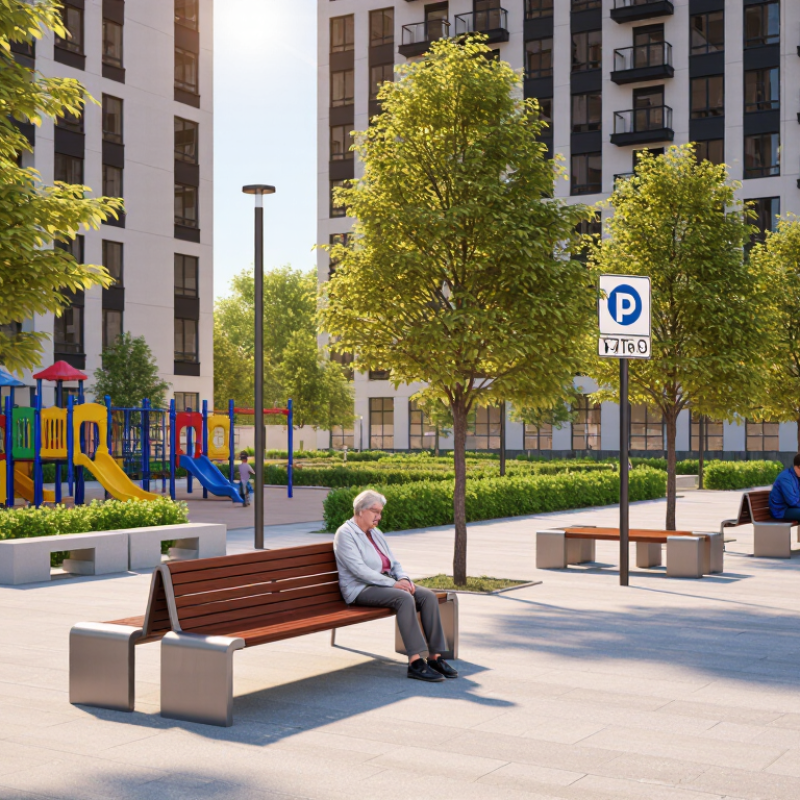
What Public Benches Are and How They Function in Urban Design
Public benches are simple urban fixtures, but their role is more complex than it appears. A bench provides a place to rest, wait, observe, or meet. In urban design, it turns unused pavement into a social setting. UN-Habitat’s World Cities Report 2022 projects that 68% of the global population will live in urban areas by 2050. This growth makes small, accessible resting places increasingly important.
A well-designed bench supports movement through the city. Older adults can pause between destinations. Parents can watch children near a play area. Workers can eat outdoors during a short break.
The World Health Organization’s Global Age-friendly Cities guide recommends regular seating, especially along walking routes and near public facilities.
Placement matters as much as construction. A bench facing a blank wall feels different from one facing trees, pedestrians, or sunlight. Shade, back support, armrests, and clear wheelchair space also influence who can use it comfortably.
The details are practical.
In real streets, benches sometimes become uncomfortable or poorly positioned. They may block walking routes, collect rainwater, or offer no shade at noon. This shows a weakness in purely visual design. Public seating should be tested through observation, maintenance records, and direct user feedback. Designers can count waiting times, note unused locations, and speak with people who rarely sit there. No single bench serves everyone perfectly. That limitation deserves more honest attention in urban planning.
How Seating Supports Rest, Accessibility, and Inclusive Public Use
Public benches do more than fill empty edges. They give older adults, parents, and tired pedestrians a place to pause. A short rest can make a long journey possible. For someone with limited stamina, seating may determine whether a public space feels usable.
Accessibility depends on more than adding a bench. Seats should provide stable surfaces, comfortable heights, and enough room beside them for mobility devices. Backrests and arm supports can help people sit down and stand safely. Clear walking paths must remain open. A bench placed across a ramp is not inclusive design. It is an obstacle.
Placement also shapes public life. Benches near transit stops support daily travel, while seats beside playgrounds help caregivers supervise children. Shade, lighting, and clear sightlines can improve comfort and personal security. Maintenance matters too. A loose board or wet surface can discourage use quickly. Designers sometimes assume that one standard bench suits everyone, but that assumption deserves review. Some people need back support, some need space to transfer, and others prefer a seat with a view of passing activity. Even small seating areas can feel unwelcoming when they ignore these differences.
What Ergonomic Standards Recommend for Bench Height and Depth
Why Are Benches Essential for Public Spaces?
A well-designed bench gives people a practical reason to pause, talk, wait, or recover during a walk.
Its comfort depends heavily on proportion, especially seat height and depth. Ergonomic guidance commonly recommends a seat height of about 430–480 millimeters for many adults. This range supports easier sitting and standing without forcing the knees too high. A seat depth near 400–500 millimeters can provide thigh support while keeping the back close to the backrest.
Small details matter. A slightly sloped seat may improve posture and help rainwater drain away. Rounded front edges reduce pressure behind the knees. A firm backrest, positioned near the lower and middle back, can make longer sitting more comfortable. However, no single measurement suits every body. Older adults, children, and people using mobility aids may need different solutions. That is where standard measurements can fall short.
Tips: Test a full-scale sample before installation. Sit for ten minutes, not ten seconds. Check whether feet rest firmly on the ground and whether users can stand without pushing hard. Leave enough space beside the bench for mobility devices and personal movement. Observe real users, too. Their feedback may reveal problems that drawings miss. A bench can look balanced and still feel awkward.
How Bench Placement Influences Walkability and Social Interaction
Why Are Benches Essential for Public Spaces?
How Bench Placement Influences Walkability and Social Interaction
Benches are not merely resting furniture. Placed well, they shape how people move, pause, and meet. In site observations, a bench beside a narrow path often slows walking and creates awkward passing. Moving it several feet away can preserve a clear walking line. This small adjustment may improve comfort for older adults, wheelchair users, and parents with strollers.
Location also affects social behavior. Benches facing one another can encourage conversation, while parallel seating supports quiet observation. A seat near a tree may attract people during hot afternoons. One beside a busy crossing can feel stressful and exposed. Designers should study sunlight, noise, visibility, and nearby destinations before choosing a position. Practical accessibility guidance also supports generous circulation space around every seat.
I have seen attractive benches remain empty because they faced a blank wall. That was a design mistake. Comfort alone does not create connection. People need a reason to stop, such as shade, a view, or activity nearby. Still, not every placement works equally for every person. Some users prefer privacy, while others seek company. Trial observations at different hours can reveal patterns that drawings miss. A bench may look perfect on opening day, yet seasonal shadows and changing foot traffic can challenge the original decision.