
What Are Titanium Sheets Used For?

Titanium Sheets are engineered for situations where low weight, corrosion resistance, and dependable strength must work together. They appear in aircraft panels, heat exchangers, medical devices, chemical tanks, and marine structures. The material is not simply “strong metal.” Its value comes from a protective oxide film that reforms quickly after surface damage.

Industry data supports this broad role. The U.S. Geological Survey’s Mineral Commodity Summaries 2025 identifies aerospace, chemical processing, power generation, marine equipment, and medical applications as important titanium markets. Boeing’s Commercial Market Outlook 2024–2043 forecasts demand for 43,975 new commercial aircraft over the next two decades. That projection helps explain continued interest in lightweight titanium components, including formed and machined sheets.

Some applications are highly visible. A thin sheet can line a chemical vessel, where acidic fluids would attack ordinary steel. In an aircraft, the same material may support a bracket or panel while reducing structural weight. In hospitals, carefully specified titanium can serve implants because it combines biocompatibility with mechanical reliability.

The details matter.

Grade, thickness, surface finish, and fabrication method determine performance. Grade 2 is often selected for corrosion resistance and forming. Grade 5 offers higher strength, but it demands tighter machining control. These choices are not interchangeable.

Reports describe market direction, not every purchasing decision. Real performance still depends on welding quality, inspection, temperature, and the operating environment. That is where product datasheets and application testing become essential. Titanium Sheets can solve difficult engineering problems, but they are not automatically the best answer for every design.
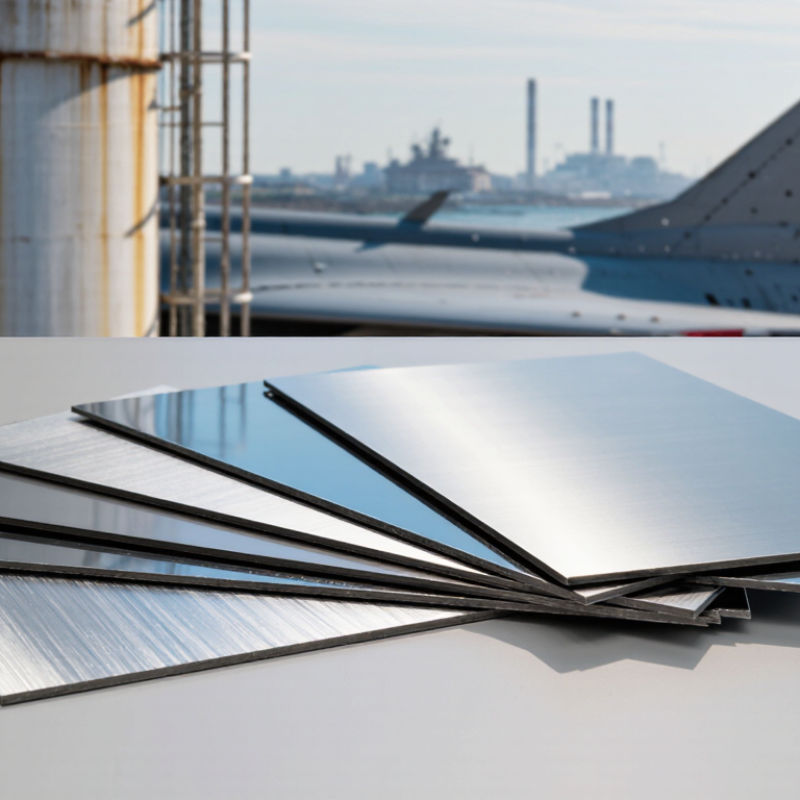
What Are Titanium Sheets Used For?

Titanium Sheets: Definition, Composition, and Basic Characteristics

Titanium sheets are flat, rolled products made from titanium or titanium alloys. Their composition commonly includes titanium with small amounts of aluminum, vanadium, iron, oxygen, or carbon. These elements adjust strength, weight, hardness, and corrosion resistance. The exact grade matters because two sheets may look identical but perform differently.

Titanium has a low density compared with many structural metals. It also offers high strength, excellent resistance to seawater, and stable performance at elevated temperatures. Its surface develops a protective oxide layer when exposed to air. This natural layer helps slow corrosion. In practical fabrication, titanium sheets can form aircraft panels, chemical processing equipment, medical components, heat exchangers, and marine structures. However, cutting and welding require careful control. Contamination can weaken a finished joint.

Tips: Check the grade, thickness, surface condition, and required standard before purchasing. Measure flatness and inspect edges for cracks or deep scratches. For welded parts, use clean tools and controlled shielding gas. A materials engineer should confirm suitability for pressure, temperature, and chemical exposure. I have found that “corrosion resistant” is not enough information. The actual environment can still cause unexpected damage, especially when other metals touch titanium. Consult current technical data and applicable standards before production.

Titanium Sheets: Definition, Composition, and Basic Characteristics

Titanium sheets are flat, rolled products made from commercially pure titanium or titanium alloys. The chart compares the minimum specified tensile strength of three commonly used sheet grades, illustrating how composition influences material selection.

Grade 1 offers excellent formability and corrosion resistance for chemical-processing equipment and heat exchangers. Grade 2 provides higher strength while retaining strong corrosion resistance and is widely used in marine and industrial applications. Grade 5, an alpha-beta alloy containing aluminum and vanadium, delivers substantially higher strength for aerospace, medical, and high-performance structural components.

Key Properties That Make Titanium Sheets Useful

Titanium sheets are valued for a rare combination of low weight, high strength, and strong corrosion resistance. Their strength-to-weight ratio helps reduce structural weight in aircraft panels, pressure vessels, and transport equipment. They also perform well in seawater, chlorine environments, and many chemical-processing systems. The surface naturally forms a protective oxide layer. That thin layer repairs itself when exposed to oxygen.

Heat resistance adds another advantage. Titanium sheets can support components exposed to elevated temperatures, although performance depends on the alloy, thickness, and service conditions. They also resist fatigue better than many common metals. Medical manufacturers use selected grades for implants and surgical components because titanium can be compatible with human tissue. However, “titanium” is not one universal material. Grade selection matters.

Tips: Check the required grade, thickness, surface finish, and tolerance before ordering. Inspect edges for dents, scratches, or contamination. Titanium can gall during machining, so suitable tools, lubrication, and controlled cutting speeds are important. Keep sheets separated from steel dust in the workshop. Small particles can create surface problems. Corrosion resistance does not remove every design risk. Galvanic contact with dissimilar metals may still require isolation. A practical review should include temperature, load cycles, cleaning chemicals, and fabrication methods. The lightest sheet may not be the most reliable choice.

Major Industries That Use Titanium Sheets

What Are Titanium Sheets Used For?

Major Industries That Use Titanium Sheets

Titanium sheets are widely used where low weight, corrosion resistance, and heat tolerance matter. Aerospace remains a major market. Aircraft manufacturers use sheets for fuselage panels, engine components, firewalls, and structural brackets. The International Titanium Association reports that aerospace applications account for more than half of global titanium demand. MarketsandMarkets also projects continued growth in the titanium metal market through 2028, supported by aircraft production and advanced engineering.

Chemical processing plants use titanium sheets for heat exchangers, tanks, piping linings, and reactor parts. The metal resists chlorides, seawater, and many aggressive chemicals. Desalination systems also depend on titanium because saltwater quickly damages ordinary steel. In medical manufacturing, thin titanium sheets become surgical instruments, dental components, and implant parts. ASTM material standards help engineers control grade, thickness, surface condition, and mechanical performance.

Tips: Match the grade to the environment. Grade 2 suits many chemical and marine uses, while Grade 5 offers higher strength. Always check welding procedures and surface contamination controls.

Marine equipment, power generation, and food-processing systems use titanium sheets too. The U.S. Geological Survey’s Mineral Commodity Summaries identifies titanium as an important material for aerospace, chemical, and industrial applications. Still, cost can limit wider adoption. A strong sheet is not automatically the best choice. Designers should compare lifecycle savings, fabrication difficulty, and inspection requirements before specifying titanium.

Common Applications of Titanium Sheets

What Are Titanium Sheets Used For?

Common Applications of Titanium Sheets

Titanium sheets are used where low weight, high strength, and corrosion resistance must work together. Their performance remains reliable in saltwater, humid air, and many chemical environments. Aerospace engineers use them for aircraft panels, brackets, engine components, and protective structures. A thinner sheet can reduce weight without sacrificing useful mechanical strength.

Chemical processing plants use titanium sheets for tanks, liners, heat exchangers, and pipe supports. These parts may contact chlorides, acids, or seawater during daily operation. Fabricators must select the right grade and welding method for each service condition. Small errors in heat control can weaken a joint. That detail is often underestimated.

Marine equipment also benefits from titanium’s resistance to seawater corrosion. Common examples include hull fittings, desalination equipment, and offshore system components. Medical manufacturers use sheets for instrument parts, trays, shielding, and selected device components. Architectural designers sometimes choose titanium cladding for roofs and exterior panels, especially where a long service life matters. It looks distinctive. However, cost, forming difficulty, surface appearance, and maintenance access still influence the final decision. In some projects, stainless steel may be more practical. Engineers should compare the full lifecycle, not only the material price.

What Are Titanium Sheets Used For? - Common Applications of Titanium Sheets

Application Common Sheet Components Why Titanium Sheets Are Used Common Grades Key Performance Considerations
Aerospace Aircraft skins, bulkheads, brackets, firewalls and engine-related panels High strength-to-weight ratio, good fatigue performance and resistance to heat and aviation-related corrosion Grade 5; commercially pure Grades 1–4 for selected parts Weight reduction, fatigue life, temperature exposure and forming requirements
Chemical Processing Tanks, heat-exchanger plates, reaction vessels, piping liners and agitator components A stable oxide film provides strong resistance to many oxidizing and chloride-containing environments Grades 2 and 12; alloy selection depends on the process chemistry Chemical concentration, temperature, crevice conditions and potential hydrogen absorption
Marine and Offshore Heat exchangers, seawater piping, pump parts, riser components and structural panels Excellent seawater corrosion resistance and high strength with relatively low density Grades 2, 5 and 12 Galvanic compatibility with dissimilar metals, crevice design and cathodic-protection effects
Medical and Dental Implant plates, fixation components, surgical instruments and equipment panels Biocompatibility, corrosion resistance and compatibility with sterilization processes Commercially pure titanium and Grade 5; specification depends on the device Surface finish, cleanliness, fatigue strength, traceability and applicable medical standards
Power Generation Condenser tubing supports, heat-exchanger plates, turbine-related parts and flue-gas equipment Resistance to seawater, humid environments and selected acidic or chloride-bearing conditions Grades 2, 7 and 12, subject to service chemistry Heat-transfer design, erosion, vibration, deposits and water chemistry
Oil and Gas Downhole tools, separators, flow-control components and corrosion-resistant cladding High strength and resistance to selected sour, chloride-rich and high-pressure environments Grades 5 and 12; specialized alloys may be required Hydrogen sulfide, pressure, temperature, erosion and sour-service requirements
Architecture and Construction Roofing, façades, wall panels, canopies and decorative exterior elements Low maintenance, durable appearance, corrosion resistance and a favorable strength-to-weight ratio Commercially pure Grades 1–4 Surface finish, thermal movement, detailing, fastener compatibility and fabrication cost
Automotive and Motorsport Heat shields, exhaust components, brackets and lightweight performance parts Low density, high specific strength and useful performance at elevated temperatures Grade 5 and selected commercially pure grades Thermal cycling, vibration, weldability, galling prevention and cost control
Sports and Recreation Bicycle parts, climbing hardware, marine equipment and lightweight protective components High strength-to-weight ratio, corrosion resistance and good durability in outdoor environments Grade 5 and commercially pure titanium Fatigue loading, impact resistance, weld quality, surface condition and user safety

Note: The appropriate titanium grade, sheet thickness and surface finish should be selected according to the operating environment, design loads, fabrication method and applicable standards.

How to Choose the Right Titanium Sheet for Each Application

What Are Titanium Sheets Used For?

Titanium sheets are used where low weight, high strength, and corrosion resistance must work together. Common applications include aircraft panels, chemical processing equipment, marine components, heat exchangers, and medical devices. In practice, the correct sheet depends more on service conditions than on appearance. A bright surface may look impressive, but it cannot compensate for the wrong alloy or thickness.

Start by identifying the working environment. Consider temperature, exposure to saltwater, acids, cleaning chemicals, and repeated stress. Commercially pure titanium suits many corrosive environments and offers good formability. Alloyed grades provide greater strength when structures face heavy loads.

Thickness should match both the design load and the forming method. A thin sheet may reduce weight, yet it can wrinkle or distort during fabrication. Small details matter.

Surface condition also deserves attention. A smooth finish can support hygiene, while a rougher finish may improve certain bonding or coating processes. Ask for verified chemical composition, mechanical test results, dimensional tolerances, and material traceability. These records help engineers confirm performance instead of relying on a sales description. Cutting, welding, and bending requirements should be discussed before ordering. Even experienced teams sometimes choose a grade from habit. That decision can fail when temperature or chemical exposure changes. Recheck the real conditions, not the assumed ones.

Article Source:

Enquire Today

"*" indicates required fields