What is a Tractor Guidance System and How Does It Work?
In the modern agricultural landscape, precision is essential. A tractor guidance system plays a crucial role in achieving that precision. Expert John Smith, a leading authority in agricultural technology, states, "A tractor guidance system revolutionizes how farmers operate their machinery." His insights underline the significant impact of these systems.
tractor guidance systems use GPS and sensors to enhance accuracy. They help minimize overlap and reduce waste, improving crop yield and efficiency. By automating the steering of tractors, these systems allow farmers to focus on other critical tasks. However, the technology is not without its challenges. Calibration can be complex, and reliance on technology may lead to a lack of basic driving skills.
Farmers must weigh the benefits against potential drawbacks. While these systems can enhance productivity, there’s a learning curve. Farmers need to adapt to new technologies and continuously monitor their performance. In an industry that values tradition, the shift to a tractor guidance system represents both progress and a point of reflection for many in agriculture.
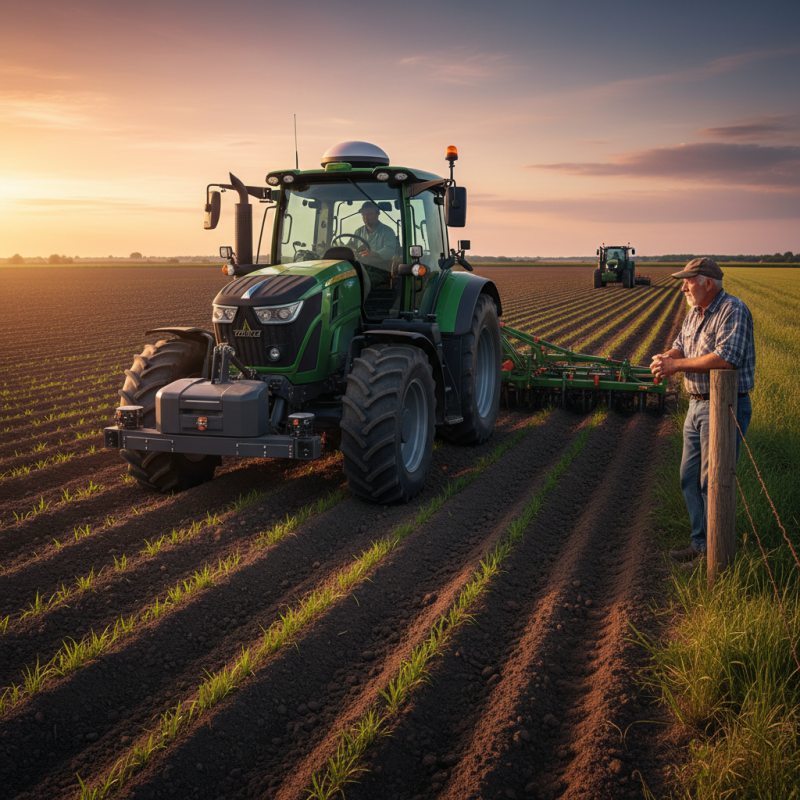
What is a Tractor Guidance System?
A tractor guidance system is an innovative technology designed to enhance farming efficiency. It allows tractors to operate autonomously or semi-autonomously, guiding them along predetermined paths in fields. This technology utilizes high-precision GPS, sensors, and software algorithms to ensure accurate vehicle positioning. Farmers can cover more land while reducing overlaps and minimizing crop damage.
The main components of a tractor guidance system include GPS receivers and onboard computers. The GPS receives signals and calculates the tractor’s location to within a few centimeters. This precision is crucial when working in the field, where accurate row alignment can impact crop yields. Additionally, various sensors monitor the tractor's movement and adjust steering accordingly.
Using such systems can increase productivity and reduce fatigue for operators. However, it’s not without challenges. Initial setup costs can be high, and learning how to use the system effectively requires time and training. Moreover, reliance on technology can be problematic in areas with poor satellite coverage. Farmers must weigh the benefits against these potential drawbacks to make informed decisions about implementing such systems in their operations.
Key Components of Tractor Guidance Systems
Tractor guidance systems play a crucial role in modern agriculture. They help farmers improve efficiency and precision when working in the fields. The key components include sensors, GPS technology, and control algorithms, which work together seamlessly.
Sensors are essential for monitoring the tractor's position and movement. They collect data about the terrain and crop conditions. This allows the system to make real-time adjustments to the tractor's path. GPS technology ensures that the tractor stays on the intended route, reducing overlaps and missed areas. The accuracy of GPS can be affected by various factors. For example, signal loss due to obstructions can create challenges in maintaining precision.
Control algorithms are responsible for processing sensor data and directing tractor operations. These algorithms can adjust the steering and speed, optimizing performance. While these systems greatly enhance productivity, they are not infallible. Calibration issues or sensor malfunctions can lead to errors. Farmers must remain alert and regularly check the system's performance to avoid potential pitfalls. By understanding these components, farmers can maximize their benefits and address any shortcomings effectively.
Types of Tractor Guidance Technologies
Tractor guidance technologies are pivotal for modern agriculture. They enhance precision, efficiency, and effectiveness in farming operations. Farmers can select from several types, including manual-guided, semi-automated, and fully automated systems. Each type serves distinct needs and operational scales.
Manual guidance relies heavily on operator skill. It is the least costly but requires significant effort and focus. Semi-automated systems, like assisted steering, lessen the workload but still need the farmer’s attention. A report from AgFunder estimates that semi-automated technologies can increase productivity by up to 20%.
Fully automated systems represent the forefront of agricultural technology. These utilize GPS and advanced sensors to navigate fields independently. Data from the Precision Agriculture Association indicates that these systems can reduce input costs by 10-15% while boosting yield quality. However, some farmers remain wary of over-reliance on technology. They fear potential failures in complex systems might lead to crop loss. Balancing technology with traditional practices could be essential for future farming success.
How Tractor Guidance Systems Improve Efficiency
A tractor guidance system is essential for modern farming. These systems use GPS and sensors to automate steering. By aligning the tractor's path precisely, they help reduce overlaps and missed areas. This technology is beneficial in large fields where precision is crucial.
Efficiency improves significantly with the use of guidance systems. Farmers report reduced input costs due to less fuel consumption. Fields are tilled and planted more uniformly. However, the setup process needs attention. Errors during calibration can lead to inaccuracies, which may negate the benefits. Ongoing training and practices help maintain the system.
Additionally, operators must stay engaged. A fully automated system does not eliminate the need for human oversight. Monitoring the equipment and adjusting settings remain vital. This combination of technology and human skill enhances productivity and sustainability in agriculture.
What is a Tractor Guidance System and How Does It Work? - How Tractor Guidance Systems Improve Efficiency
| Feature | Description | Benefit | Typical Use Case |
| Automatic Steering | Guides the tractor's steering automatically using GPS technology. | Increased precision and reduced operator fatigue. | Row cropping and planting. |
| GPS Integration | Utilizes Global Positioning System for accurate positioning. | Enhanced field coverage and reduced overlap. | Field mapping and planning. |
| Real-Time Data Monitoring | Monitors operational parameters in real-time. | Optimal decision-making and reduced downtime. | Fertilizer application and pest management. |
| Field Boundary Mapping | Creates and stores virtual boundaries for fields. | Prevention of crop damage and efficient field usage. | Border maintenance and expansion planning. |
| User-Friendly Interface | Intuitive controls and displays for ease of use. | Increased operator efficiency and minimized training time. | Various agricultural operations. |
Future Trends in Tractor Guidance Systems
In recent years, tractor guidance systems have significantly advanced, promising to reshape modern farming. These systems leverage GPS technology and advanced sensors to enhance operational efficiency. Farmers can achieve higher precision in planting and harvesting, leading to increased yields. However, integrating these technologies is not without challenges.
One emerging trend is the use of artificial intelligence in guidance systems. AI can analyze field data to optimize tractor paths, minimizing overlaps and reducing resource waste. Yet, the reliance on technology raises concerns over data security and reliability. Farmers may struggle with system malfunctions that could disrupt their workflows.
Moreover, the push for sustainability is influencing developments in tractor guidance. Systems are evolving to support eco-friendly practices, like reduced fuel consumption and lower carbon emissions. However, many farmers may find it difficult to balance these innovations with their traditional practices. The journey toward smarter agriculture is exciting but requires careful consideration of both benefits and drawbacks.