
10 Best Roller Conveyor Suppliers for Global Buyers

Choosing the right Roller Conveyor Supplier can shape warehouse efficiency, product safety, and long-term operating costs. Global buyers face many options, from small regional manufacturers to established engineering companies. Their catalogs may look similar, yet frame strength, bearing quality, control systems, and support services can differ greatly.

This guide examines 10 leading roller conveyor suppliers serving international markets. It considers manufacturing experience, product range, customization ability, certification practices, delivery capacity, and after-sales support. Practical details matter. A conveyor moving cartons in a clean distribution center needs different features from one handling steel parts, pallets, or food-grade packages. Load weight, roller diameter, conveyor width, incline, speed, and working environment should all be checked before requesting a quotation.

Specifications can mislead.

A polished website does not prove dependable production. Buyers should review technical drawings, material certificates, inspection procedures, warranty terms, and customer references. Factory videos are helpful, but independent verification remains wiser. This comparison is designed to support informed supplier screening rather than promote one universal choice. No single Roller Conveyor Supplier fits every budget, facility, or transport route.

Real projects often reveal overlooked issues. Replacement parts may take weeks to arrive. Packaging can affect imported equipment. Local installation expertise may also be limited. Therefore, the selected suppliers are assessed through a practical procurement lens, balancing engineering capability with communication, documentation, and international service. Buyers should confirm current certifications, lead times, shipping conditions, and compliance requirements directly before placing an order. Small checks can prevent expensive delays.
10 Best Roller Conveyor Suppliers for Global Buyers

Roller Conveyor Systems: Types, Uses, and Key Components

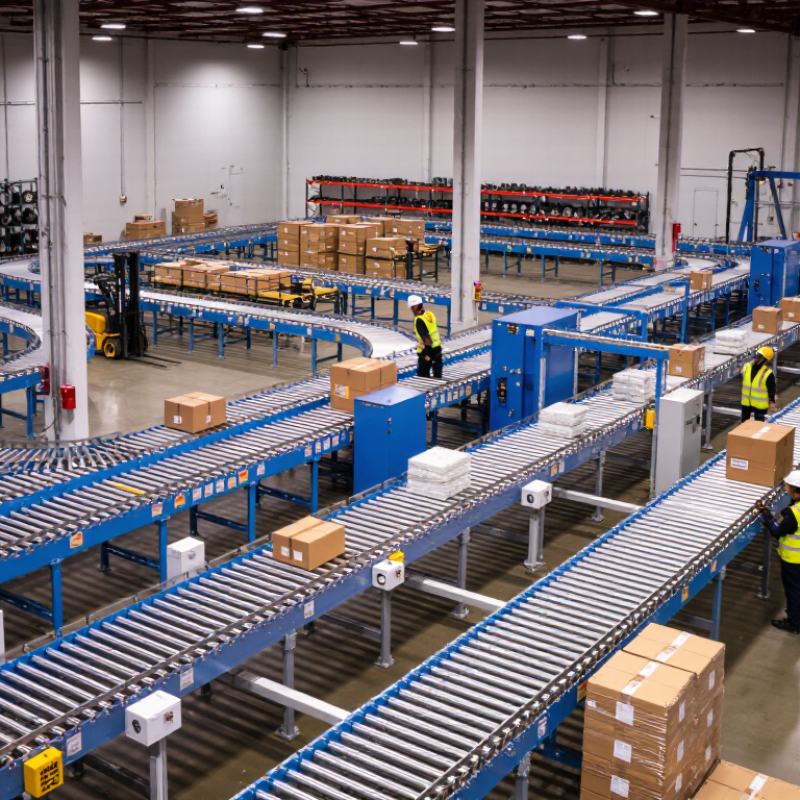
Roller conveyor systems move cartons, totes, pallets, and containers with steady, controlled motion. Their design depends on load weight, base condition, travel distance, and required speed. Gravity roller conveyors suit manual packing lines and short transfers. Powered roller conveyors handle heavier loads and continuous movement. Accumulation models pause products without stopping the entire line. Flexible conveyors fit temporary stations, although their frames may need extra support.

Key components include rollers, shafts, bearings, frames, drives, sensors, and safety guarding. Steel rollers tolerate abrasive loads, while plastic or coated rollers reduce noise and protect delicate surfaces. Roller spacing matters. Small cartons can tilt or stall when the gap is too wide. Drives may use motors, chains, belts, or zone controls. Sensors help regulate product flow, but poor placement can create unexpected gaps.

Global buyers should give suppliers precise load dimensions, weight ranges, operating temperatures, and layout drawings. Ask for bearing specifications, surface treatments, replacement procedures, and documented testing. A conveyor for a dusty warehouse needs different protection from one used near washdown areas. Field experience shows that many failures begin with underestimated side loads or weak supports. Calculations help, but real products can behave differently. A trial section is often valuable. It may reveal noise, slipping, or alignment problems before full installation. Supplier reliability also depends on spare-part access, technical documentation, and responsive after-sales service.

How to Evaluate Roller Conveyor Suppliers for Global Purchasing

Choosing among the 10 best roller conveyor suppliers requires more than comparing online prices. Global buyers should verify product experience, engineering capability, and after-sales support.

Ask each supplier for drawings, load calculations, and material specifications. Check roller diameter, shaft strength, frame thickness, and surface treatment. These details matter when cartons arrive unevenly or pallets exceed expected weight. Request a sample section when possible. A short factory trial can reveal noise, vibration, and poor alignment.

Review documented projects with similar loads and working conditions. A supplier serving humid warehouses should explain corrosion protection clearly. Confirm quality procedures, inspection records, and relevant certifications. Factory audits, video inspections, and independent testing can improve confidence. Still, paperwork is not proof by itself.

Discuss production capacity, replacement parts, packaging, delivery terms, and communication speed. Ask who handles technical changes after the purchase order. Clear answers usually indicate stronger project control. Compare quotations line by line, not only by total cost. Cheap rollers may create higher maintenance expenses later.

No checklist is perfect. I would recheck assumptions about load frequency, floor levels, and future expansion. Suppliers also need precise information from buyers. Vague requirements can produce a technically correct conveyor that performs badly onsite. Evaluate evidence, test results, and practical cooperation together.

10 Best Roller Conveyor Suppliers for Global Buyers

How to Evaluate Roller Conveyor Suppliers for Global Purchasing

The chart presents a practical weighted evaluation model for comparing roller conveyor suppliers. Product quality and certifications receive the highest weighting because conveyor reliability, load performance, and compliance directly affect operational safety and long-term costs. Buyers should adjust the weights according to project requirements, destination-market regulations, and delivery priorities.

Profiles of the 10 Best Roller Conveyor Suppliers Worldwide

Supplier One serves high-throughput warehouses with galvanized rollers, reinforced frames, and modular sections. Its engineering team supports load calculations and installation drawings. Supplier Two focuses on food-processing environments, offering stainless steel surfaces, sealed bearings, and washdown-friendly designs. Hygiene details matter.

Supplier Three builds gravity conveyors for parcel handling and small distribution centers. Buyers value simple maintenance and low energy use. Supplier Four specializes in powered roller systems, including variable-speed drives, sensors, and emergency-stop integration. Its controls expertise suits automated lines. Supplier Five provides heavy-duty conveyors for pallets, drums, and metal containers. Weld quality and axle strength are key evaluation points. Supplier Six offers compact units for packaging rooms, where adjustable legs and quiet operation improve daily work.

Supplier Seven supports large logistics projects with custom widths, transfers, and accumulation zones. Its project documentation can reduce installation errors. Supplier Eight supplies corrosion-resistant systems for coastal warehouses and outdoor loading areas. Surface treatment should still be checked carefully. Supplier Nine targets flexible manufacturers with mobile conveyors, quick-release sections, and reusable components. This option helps facilities change layouts without major construction. Supplier Ten combines standard conveyor modules with consulting for line balancing, safety guarding, and spare-parts planning.

These suppliers differ in service depth, not only price. Buyers should compare roller diameter, load capacity, frame material, motor ratings, warranty terms, and response times. Site measurements remain essential. A catalog cannot reveal every floor problem. Even a strong supplier may miss a detail when the application data is incomplete. Requesting drawings, test records, and reference installations creates a more reliable purchasing decision.

Comparing Supplier Quality, Pricing, Customization, and Delivery

10 Best Roller Conveyor Suppliers for Global Buyers

Comparing suppliers requires more than reading a catalog price. I examine roller diameter, tube thickness, bearing quality, frame steel, and rated load. A conveyor carrying cartons all day needs different construction from one moving light plastic bins. Ask for load test records, material certificates, and photographs of completed installations. These details reveal manufacturing discipline better than polished sales language.

Pricing should include tooling, packaging, spare rollers, taxes, freight, and installation support. A low factory quote may become expensive after ocean transport and replacement parts. Request the same specification from each supplier, including roller spacing and working width. I also check minimum order quantities and payment terms. Quotes with unclear exclusions deserve caution. Cheap is not always efficient.

Customization separates capable suppliers from simple resellers. Reliable manufacturers can provide CAD drawings, motorized options, corrosion-resistant finishes, and adjustable legs. Confirm who approves design changes and who pays for rework. Delivery promises should show production time, inspection time, and shipping time separately. Ask for sample units or a pilot section before placing a large order. I have seen schedules slip because drawings were approved too late. That mistake is easy to repeat. Supplier references, warranty response, packaging strength, and spare-part availability help measure long-term reliability. A careful comparison may take longer, but it exposes weak assumptions before equipment reaches the warehouse.

How Global Buyers Can Select the Right Roller Conveyor Supplier

10 Best Roller Conveyor Suppliers for Global Buyers

How Global Buyers Can Select the Right Roller Conveyor Supplier

Choosing among ten strong roller conveyor suppliers requires more than comparing prices. Start with your load details, including product weight, dimensions, surface condition, and daily throughput. A reliable supplier should explain roller diameter, spacing, frame strength, drive method, and safety controls in practical terms. Ask for drawings before approval. Check whether the proposed conveyor fits your existing lines, warehouse floor, and maintenance access.

Request evidence of manufacturing experience. Useful proof includes test records, material certificates, installation photos, and references from similar industries. Confirm production capacity and quality inspections, not just sales promises. A supplier should also clarify spare-part availability, warranty coverage, delivery terms, and remote technical support. Review compliance requirements for every destination market. Small documentation gaps can delay an otherwise ready shipment.

Tips: Send a simple product sample or accurate photos. Measure the heaviest load twice. Ask how rollers perform under dust, moisture, and repeated impacts. Compare total ownership cost, not only the quotation. One common mistake is accepting a standard design too quickly. It may look efficient, yet create noise, product damage, or difficult cleaning later. Even experienced buyers sometimes overlook operator reach and emergency-stop locations. A factory video call helps, but it cannot replace inspection evidence or a clear acceptance test. Decision notes should record assumptions, because early assumptions often change during installation.

10 Best Roller Conveyor Suppliers for Global Buyers - How Global Buyers Can Select the Right Roller Conveyor Supplier

A practical comparison framework based on conveyor application, technical capability, customization, compliance, and international purchasing requirements.

Rank Anonymous Supplier Profile Primary Strength Typical Conveyor Type Typical Load Range Roller Diameter Customization International Documentation Best Fit for Global Buyers
1 Profile A — Global Modular Integrator Complete material-handling systems Powered, belt-driven, and gravity roller conveyors 50–2,000 kg per load 38–89 mm High Drawings, manuals, packing list, COO Large warehouses, distribution centers, and turnkey projects
2 Profile B — Heavy-Duty Fabricator High-load steel conveyor construction Heavy-duty gravity and chain-driven roller conveyors 500–3,000 kg per load 60–114 mm High Load calculations, weld specifications, inspection records Automotive, metalworking, pallet, and industrial assembly lines
3 Profile C — E-Commerce Automation Specialist High-throughput parcel handling Motorized roller and zero-pressure accumulation conveyors 10–80 kg per carton 24–60 mm High Electrical diagrams, control documents, test reports Parcel hubs, fulfillment centers, and sortation applications
4 Profile D — Stainless-Steel Hygienic Supplier Washdown and corrosion resistance Stainless-steel gravity and powered roller conveyors 20–500 kg per load 38–76 mm Medium–High Material certificates, surface-finish data, hygiene documents Food, beverage, pharmaceutical, and clean-processing facilities
5 Profile E — Standard Warehouse Equipment Supplier Cost-effective standard modules Gravity roller conveyors and flexible conveyors 10–250 kg per load 25–60 mm Medium Product drawings, carton dimensions, export packing details Small warehouses, packing stations, and budget-sensitive projects
6 Profile F — Flexible Conveyor Manufacturer Portable and reconfigurable layouts Expandable skate-wheel and flexible roller conveyors 15–100 kg per load 25–50 mm Medium Assembly drawings, operating instructions, spare-parts list Seasonal operations, loading docks, and multi-purpose work areas
7 Profile G — Pallet Conveyor Specialist Pallet transport and accumulation Chain-driven roller and pallet accumulation conveyors 500–1,500 kg per pallet 76–114 mm High Layout drawings, motor data, structural calculations, FAT records Pallet warehouses, manufacturing plants, and logistics terminals
8 Profile H — OEM Component and Roller Supplier Replacement rollers and conveyor components Gravity rollers, tapered rollers, shafts, and bearings 20–800 kg per roller 25–89 mm High Dimensional inspection, material data, batch traceability System integrators, maintenance teams, and replacement-part buyers
9 Profile I — Incline and Sortation Specialist Product orientation and controlled transfer Cleated, grooved, tapered, and angled roller conveyors 10–300 kg per load 38–76 mm High Performance drawings, speed data, safety documentation Packaging lines, parcel handling, and multi-level material flow
10 Profile J — Regional Export-Oriented Manufacturer Competitive export pricing and standard production Gravity, powered, and belt-over-roller conveyors 20–1,000 kg per load 38–89 mm Medium–High Commercial invoice, packing list, COO, product drawings Importers seeking standard equipment with manageable project complexity
Buyer evaluation note: The load ranges, roller diameters, and documentation shown are common application benchmarks rather than claims about a specific company. Before placing an order, verify rated capacity, frame strength, roller pitch, speed, motor specifications, safety compliance, warranty terms, spare-parts availability, total landed cost, and delivery schedule in the supplier’s technical quotation.

Enquire Today

"*" indicates required fields