How to Choose the Right Solenoid Valve?
Choosing the right Solenoid Valve is rarely a matter of selecting the lowest price. The valve must match the fluid, pressure, temperature, voltage, connection size, and operating cycle. A small mismatch can cause slow actuation, internal leakage, or premature coil failure. It may even stop a production line.
Valve engineer John E. Fletcher offers a practical reminder: “A reliable valve begins with the application, not the catalogue.” This principle deserves attention. Before comparing brands, identify the medium moving through the system. Water, compressed air, oil, steam, and aggressive chemicals demand different body and seal materials. Check the normal pressure, maximum pressure, flow rate, and response time. Then confirm whether the valve should be normally closed or normally open.
Details matter.
During equipment inspections, technicians often discover an overlooked issue: the coil voltage does not match the control circuit. A 24-volt DC coil cannot simply replace a 230-volt AC coil. Ambient heat also matters. A valve beside a furnace may require a high-temperature coil and suitable sealing materials. These practical conditions are easy to miss when selection focuses only on port size.
No guide can remove every uncertainty. Real systems contain vibration, dirt, voltage fluctuations, and imperfect maintenance. Therefore, selection should include a safety margin without becoming wasteful. Reviewing the manufacturer’s datasheet, installation limits, certifications, and service recommendations remains essential. The best Solenoid Valve is not always the largest or most advanced model. It is the one that performs consistently under the conditions your system actually creates.
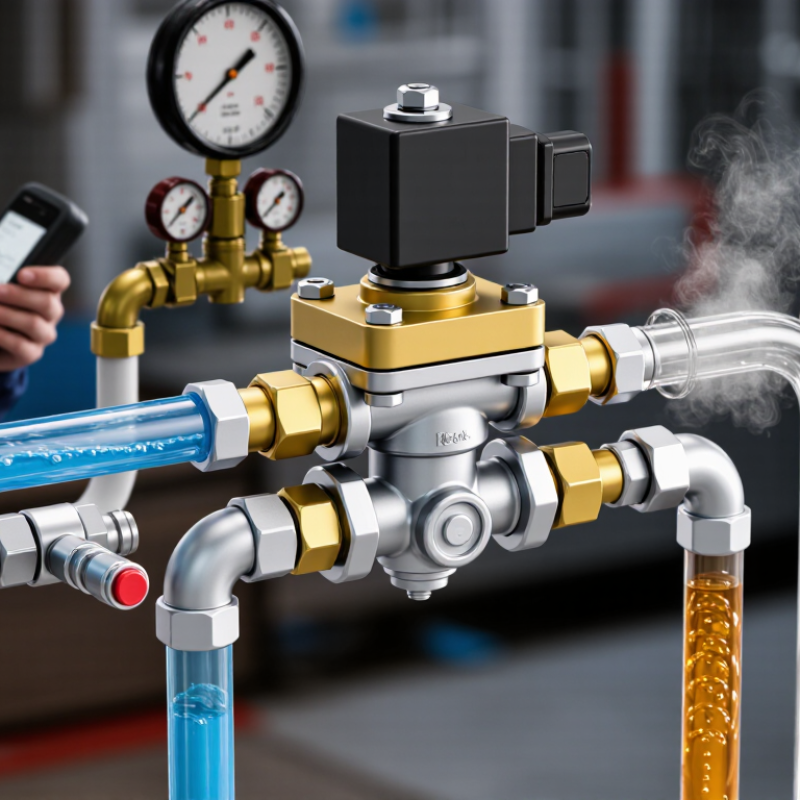
Define Valve Types: 2/2-Way, 3/2-Way, Normally Closed, and Normally Open
Choosing the right solenoid valve starts with understanding its flow paths and default position. A 2/2-way valve has two ports and two states: open or closed. It suits simple on-off control for water, air, oil, or other compatible fluids. Check the arrow on the valve body. It must match the intended flow direction.
A 3/2-way valve has three ports and three switching positions or paths. It is commonly used with single-acting cylinders, pneumatic actuators, and pressure-release circuits. The valve may supply pressure through one port while exhausting another. This arrangement needs careful port identification. Small errors can reverse actuator movement.
Normally closed valves remain shut when the coil is not energized. They are useful when flow should stop during power loss. Normally open valves allow flow without electrical power, which may suit cooling or ventilation circuits. The safer choice depends on the process, not habit. Consider pressure, temperature, fluid cleanliness, response time, coil voltage, and seal compatibility. A valve rated for high pressure may still fail with unsuitable chemicals or debris. Install a filter when contamination is likely. It is easy to overlook power failure behavior. That mistake can affect the whole system. Test the valve under real operating conditions, because laboratory results may not reflect pressure surges, heat, or frequent cycling.
Match Flow Requirements Using Cv, Pressure Drop, and Required Flow Rate
How to Choose the Right Solenoid Valve?
Start with the real flow requirement, not the pipe size. Record the required flow rate, fluid type, temperature, inlet pressure, and outlet pressure. A larger connection does not guarantee better performance. It may only increase cost.
For liquids, Cv describes the flow a valve permits with a one-psi pressure drop. A higher Cv usually supports greater flow, but pressure drop still matters. Estimate the available differential pressure: inlet pressure minus outlet pressure. Then compare that value with the valve’s Cv data and required flow rate. For water, many engineers use US gallons per minute and psi. Gas sizing requires different equations and considers pressure ratio, temperature, and compressibility. Do not apply a liquid formula blindly.
Field measurements often reveal errors. Check pressure with gauges near the valve, not several meters away. A clogged filter can reduce inlet pressure and make a correctly sized valve appear defective. Leave practical margin, but avoid excessive oversizing. An oversized valve can operate roughly, create unstable flow, or fail to control low demand accurately. The valve’s rated differential pressure must also match the application. Some direct-acting valves need a minimum pressure difference, while zero-pressure systems require a suitable design. I have seen calculations based on clean water, although the process fluid contained particles and changed viscosity. That assumption needed review. Temperature shifts can change viscosity, seal behavior, and actual flow. Test the selected valve under realistic operating conditions.
Check Media Compatibility Across Temperature Ranges of −40°C to 180°C
How to Choose the Right Solenoid Valve?
Check Media Compatibility Across Temperature Ranges of −40°C to 180°C
A solenoid valve must match the media, not just the pipe size. I have seen valves fail because a seal handled water well but softened in hot oil. At −40°C, some elastomers stiffen and lose flexibility. At 180°C, they may harden, swell, or release unwanted particles. Temperature changes everything.
Check the valve body, seal material, and internal spring together. A compatible seal can still fail if the body corrodes or the lubricant breaks down. Confirm the media’s viscosity across the entire operating range. Cold liquids may move slowly, while heated liquids can become thinner and more aggressive. Do not guess.
Review the manufacturer’s temperature ratings for continuous and intermittent service. A valve rated for 180°C may only tolerate that temperature briefly. Ask whether the rating includes pressure, cycling frequency, and the surrounding ambient temperature. Thermal expansion also matters. Repeated heating and cooling can loosen connections and accelerate fatigue.
For critical systems, test a sample with the actual media. Observe leakage, response time, coil temperature, and seal condition. Record results after several heating and cooling cycles. A clean laboratory result may not represent field conditions. That is worth questioning. Also inspect the media for additives, moisture, or suspended particles. Small contaminants can damage a narrow orifice quickly. Choose based on verified compatibility, not a convenient temperature number.
How to Choose the Right Solenoid Valve?
Indicative media compatibility across temperature ranges from −40°C to 180°C
The chart shows typical continuous service windows for commonly used seal materials with selected media. Actual limits depend on concentration, pressure, duty cycle, valve-body material, and chemical exposure. Always confirm the manufacturer’s compatibility data before selection.
Select Coil Specifications: 12/24 VDC, 100% Duty Cycle, and Power Rating
How to Choose the Right Solenoid Valve?
Select Coil Specifications: 12/24 VDC, 100% Duty Cycle, and Power Rating
Choosing a solenoid valve starts with matching the coil to the control system. A 12 VDC coil suits a 12-volt battery or control circuit. A 24 VDC coil needs a compatible power supply. Never assume both voltages are interchangeable. The wrong voltage can cause weak operation, overheating, or coil failure. Check the actual supply voltage under load, not only its label.
A 100% duty cycle means the coil can remain energized continuously. This matters in systems that hold a valve open for hours. Check the power rating in watts, then calculate current with voltage divided by power. Higher wattage may provide stronger actuation, but it also creates more heat. In field checks, ventilation and ambient temperature often receive too little attention. That is a mistake worth reconsidering. Wiring size, connector condition, and insulation also affect reliable performance.
Tips: Confirm voltage, wattage, duty cycle, and current before ordering. Leave room for supply variation. Measure coil temperature during a realistic operating test. A valve that works briefly may still fail during continuous operation. Review the manufacturer’s technical data and installation limits. Small details matter.
Verify Protection and Compliance: IP65–IP67, NEMA 4X, UL, and CE
How to Choose the Right Solenoid Valve?
A solenoid valve must survive the environment around it, not just control fluid flow. In field inspections, dust and water often enter through cable glands, connectors, or damaged seals. IP65 means dust-tight protection and resistance to water jets. IP66 withstands stronger water jets, while IP67 covers temporary immersion under defined test conditions. These ratings are useful, but they are not permanent guarantees. A cracked enclosure changes everything.
NEMA 4X adds protection against hose-directed water, dust, and corrosion. It is especially relevant near washdown areas, salt air, or chemical exposure. However, NEMA and IP ratings use different test methods, so one should not be treated as an automatic equivalent of the other. Check the complete valve assembly, including the coil, connector, enclosure, and mounting position. The weakest component usually controls real-world protection.
Compliance documents deserve equal attention. A UL listing or recognition can support electrical safety requirements, but the exact category and conditions matter. CE marking indicates conformity with applicable European requirements; it is not a universal quality certificate. Request current declarations, test reports, and installation limits from the supplier. Inspect the markings on the actual product, not only a catalogue image. Small details matter. I have seen teams select IP67 valves, then install them with unsuitable connectors. That mistake is easy to prevent, yet surprisingly common.