Choosing the best hydraulic check valve requires more than comparing price, thread size, or catalogue flow rate. The global hydraulic equipment market continues to expand, driven by construction machinery, industrial automation, agriculture, and energy applications. Grand View Research reported that the market was valued at approximately USD 49 billion in 2023, with continued growth expected through 2030. This expansion increases product choice, but it also increases selection risk. A suitable hydraulic check valve must match pressure, flow direction, cracking pressure, fluid type, temperature, sealing material, and installation position.
Small details matter. A valve installed near a pump may face pressure spikes during startup. A contaminated oil circuit can damage the poppet seat within months. ISO 4413 emphasizes safe hydraulic-system design, while ISO 12100 supports systematic machinery risk assessment. These standards provide valuable guidance, but they do not replace application-specific testing. A supplier’s rated flow may be measured under ideal laboratory conditions. Your real circuit may produce different pressure loss.
Look beyond the brochure.
Maintenance engineers should request pressure-drop curves, material certificates, test records, and traceable quality documentation. They should also confirm whether the manufacturer controls cleaning, assembly, and final inspection. Reports from MarketsandMarkets identify industrial automation and mobile equipment as important demand areas, yet market growth alone cannot prove valve reliability. That is a common mistake. Field experience suggests that the cheapest component often becomes expensive after repeated leakage, vibration, or downtime. This guide examines how to choose a hydraulic check valve through technical evidence, operating conditions, supplier credibility, and lifecycle cost. Some assumptions may still require rechecking. The correct choice begins with measured data, not confident guesses.
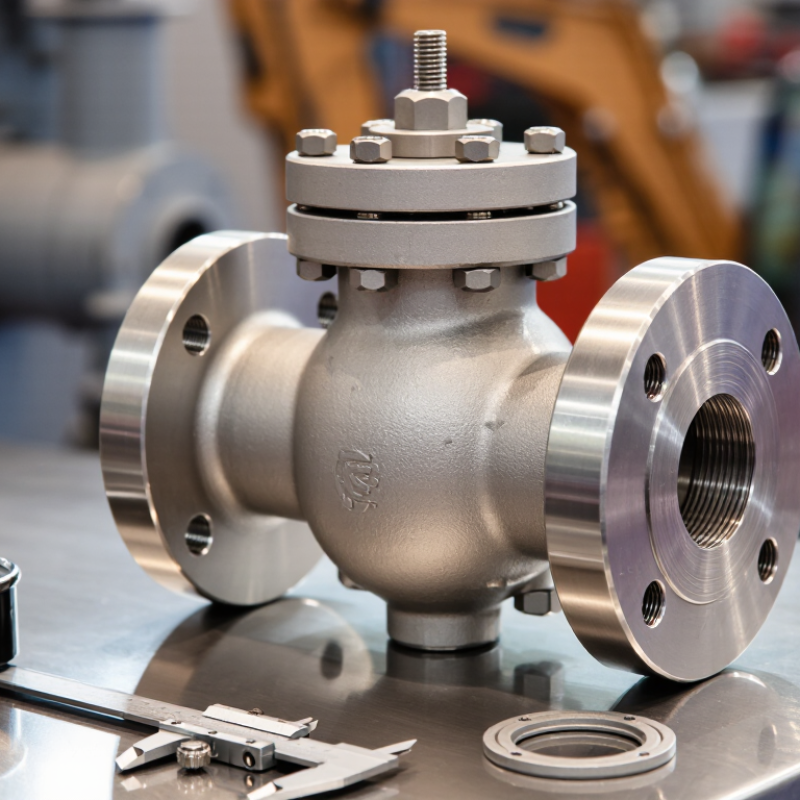
A hydraulic check valve permits flow in one direction and blocks reverse pressure. This simple action protects pumps, cylinders, and control circuits from sudden backflow. Common types include ball, poppet, inline, cartridge, and pilot-operated valves. Ball valves suit basic circuits. Poppet valves usually provide tighter shutoff. Pilot-operated models allow controlled opening under higher system pressures.
Choose according to pressure, flow rate, cracking pressure, port size, and fluid temperature. A valve rated for 250 bar may fail early when contamination causes repeated impact. Check the spring material, sealing compound, body steel, and surface treatment. In practical testing, pressure loss should be measured at the actual flow rate, not only at the catalog rating. Small details matter.
According to Grand View Research, the global hydraulic equipment market was valued at approximately USD 49 billion in 2023, with continued growth expected through 2030. This expansion increases demand for dependable directional components. ISO 4413 also emphasizes safe hydraulic-system design, including pressure control and contamination management.
Ask Chinese manufacturers for material certificates, dimensional inspection records, pressure-test results, and batch traceability. Good documentation is useful evidence. Still, documents alone cannot prove field reliability. A clean test bench, visible markings, and repeat sampling reveal more.
One overlooked issue remains valve noise. It may indicate unstable flow, excessive cracking pressure, or poor spring selection.
Pressure is the first filter. Check the system’s maximum working pressure, not its average gauge reading. A pump start can create a sharp pressure surge. ISO 4413 recommends controlling pressure risks through correct component ratings and circuit design. Select a valve with a documented pressure rating above the calculated peak. According to the 2024 MarketsandMarkets Industrial Valves report, oil, gas, water, and power remain major valve-consuming sectors. Their conditions differ greatly. A valve suitable for clean water may fail quickly in abrasive hydraulic oil.
Flow and size must be matched together. Use the manufacturer’s flow coefficient, or Cv, to estimate pressure loss at the required flow. A small valve may create heat, noise, and sluggish cylinder movement. An oversized valve can produce weak cracking performance. Keep it practical. Measure the hose’s inside diameter, thread standard, mounting space, and expected flow range. The wrong connection is not a minor mistake.
Material selection requires real operating details. Carbon steel often suits general hydraulic circuits, while stainless steel supports corrosive or wet environments. Seals must tolerate the fluid, temperature, and duty cycle. ISO 4413 also emphasizes cleanliness and contamination control. Ask for pressure-test records, material certificates, and batch traceability. I would not rely on a polished catalogue alone. In practice, particle contamination and poor installation often cause earlier failure than the valve body itself. That deserves honest review.
Valve design affects flow control, pressure loss, and maintenance. A poppet design often gives a firm shutoff under changing pressure. A ball design may respond quickly, but its seating condition needs careful inspection. Check the flow direction arrow before ordering. It sounds obvious. It is often missed during rushed installations.
Sealing performance depends on fluid type, temperature, pressure, and contamination. Metal seats can tolerate rough service, while elastomer seals may provide tighter closure. However, an unsuitable seal can swell, harden, or leak. I once saw a valve pass inspection at room temperature but seep after continuous heating. That experience changed how I review datasheets. Ask for pressure tests, leakage limits, seal materials, and cycle data. Do not judge quality from appearance alone.
Tips: Match the valve port size to the system, not only the pipe outside diameter. Confirm cracking pressure and installation orientation. Keep the housing accessible for inspection. Flush the hydraulic line before fitting the valve, because small particles can hold the seat open. For vertical lines, verify whether upward or downward flow is permitted. Threaded options simplify replacement, but flange connections may improve stability on larger assemblies. A space-saving cartridge style can work well inside compact blocks, though removal may require special tools. Always compare the drawing with the real installation space.
Choosing a China hydraulic check valve starts with verifiable manufacturer quality, not a polished catalog. The ISO Survey 2023 recorded 1,265,216 ISO 9001 certificates worldwide, but certification alone does not guarantee valve performance. Request the certificate number, issuing registrar, covered factory, and expiry date. Confirm these details through the registrar’s database. A certificate can be outdated.
During factory evaluation, ask for inspection records showing cracking pressure, reverse leakage, burst pressure, and cycle testing. ISO 4413:2010 requires hydraulic systems to address safety, contamination control, and pressure-related risks. A reliable supplier should connect these requirements with real production records. Check whether each valve carries a batch code and material traceability. I would also inspect machining areas, seal storage, calibration labels, and final testing stations. Small details matter.
Customization support separates a trading response from engineering capability. Share the port standard, flow rate, working pressure, temperature range, fluid type, installation position, and seal material. Ask for drawings, tolerance information, sample approval, and documented change control. A serious manufacturer should explain why a spring, poppet, coating, or body alloy is selected. It should also provide a first-article inspection report. My checklist is not perfect. Suppliers can still miss field conditions. Therefore, test samples with your actual fluid and pressure cycles before approving volume production. This practical step often reveals noise, leakage, or unstable cracking pressure that paperwork cannot show.
Choosing the best China hydraulic check valve starts with supplier testing, not attractive product photos. Testing should be practical.
Ask for pressure, cracking pressure, reverse leakage, and endurance test results. These figures should match your working conditions. A reliable supplier can explain the test method, equipment accuracy, and acceptance limits without hesitation. Request a sample before placing a large order. Inspect the valve body, sealing surface, thread quality, and spring response. One test is not enough.
Pricing requires more than comparing unit costs. Check whether the quotation includes inspection, packaging, documentation, spare seals, and delivery protection. A very low price may hide thinner materials or weaker quality control. I once treated a low quote as efficient purchasing, but later discovered that extra testing costs changed the real price. That mistake was preventable. Ask for a clear cost breakdown and confirm which specifications are fixed.
After-sales service shows how seriously a supplier supports its work. Confirm response times, replacement procedures, troubleshooting support, and warranty terms before payment. The supplier should provide installation guidance and identify common causes of leakage or delayed closing. Keep written records of test reports, batch numbers, and inspection results. If a problem appears, evidence speeds up corrective action. Good suppliers accept technical questions, even uncomfortable ones, and improve when a first solution proves incomplete.
Recommended supplier evaluation weighting based on testing, pricing, and after-sales service
Testing receives the highest weighting because pressure resistance, leakage control, cracking pressure, flow capacity, and cycle durability directly affect hydraulic system safety. Pricing should be compared using total cost, including valve price, shipping, inspection, and replacement risk. After-sales service covers warranty terms, technical support, spare parts availability, and response time.
Accreditations
ISO 9001 Quality Management
HSE Management Compliant
Products and services comply with relevant Australian (AS) and international (ISO, etc.) Standards.
"*" indicates required fields