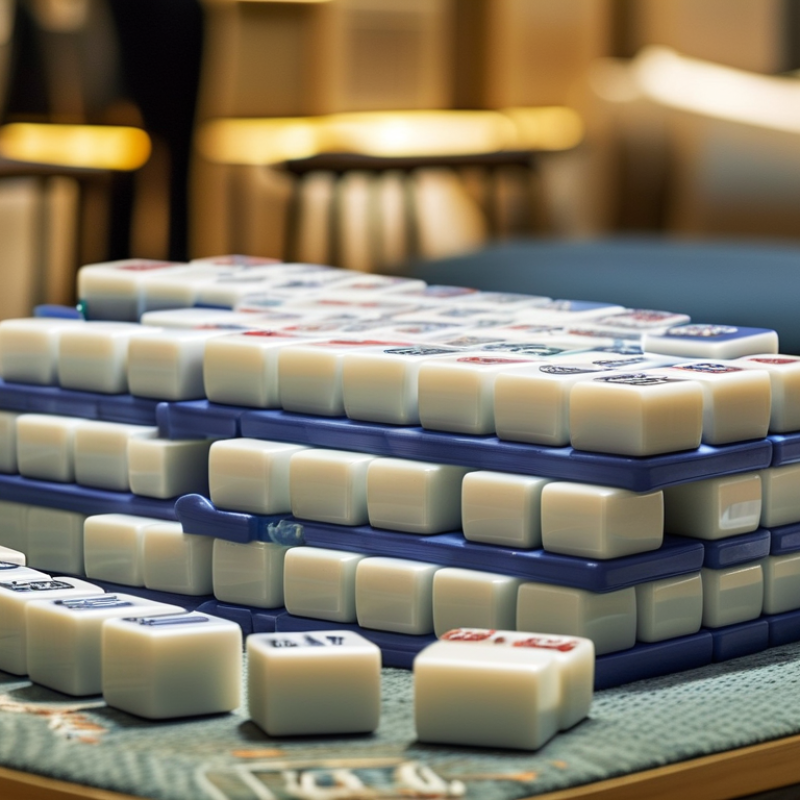
Choosing Plastic Mahjong Racks for global buyers requires more than comparing unit prices. The right rack must fit tile dimensions, table width, shipping conditions, and repeated handling. A rack that feels stable in a showroom may warp inside a hot container. Small details matter, including smooth edges, balanced weight, stackability, and clean molding around the tile channel.
The OECD’s Global Plastics Outlook reports that only about 9% of plastic waste was recycled worldwide in 2019. This figure makes material selection and product lifespan important purchasing questions. Grand View Research also identifies packaging, durability, and cost efficiency as major drivers across the global plastics market. Buyers should therefore examine resin type, wall thickness, color consistency, and packaging protection, not price alone. A cheaper rack can become expensive after cracking, bending, or generating returns.
Mahjong writer Gregg Swain offers a useful principle: “Good equipment should serve the table, not distract from the game.” For Plastic Mahjong Racks, that means quiet stability, reliable spacing, and comfortable handling. However, no universal rack standard covers every regional tile set. That limitation deserves attention. European, American, and Asian tiles may differ noticeably in size and height. Global buyers should request samples, test them with actual tiles, and verify carton dimensions before placing large orders. Supplier claims need evidence. A practical checklist follows.
Plastic mahjong racks vary by structure, material, and playing environment. Single-row racks suit casual home games and smaller tables. Multi-row racks hold more tiles and help organize longer regional tile sets. Folding racks are useful for travelers, teachers, and community clubs. They fit into a small storage case. Some buyers prefer racks with raised edges, which reduce tile movement during active play.
Material selection affects reliability. ABS plastic usually feels firm and resists bending during repeated use. Polypropylene can be lighter and more flexible. Check the rack length against the local tile size before ordering. A two-millimeter mismatch can make tiles lean or fall. I recommend testing several loaded racks on a smooth table. Small rubber feet improve grip, but soft pads may collect dust in humid regions.
Global users also need practical packaging and clear specifications. Players in schools may need bright colors and easy-clean surfaces. Tournament venues often prefer uniform racks with stable spacing. Travelers may value lightweight folding designs over maximum strength. Export buyers should inspect edge finishing, odor, color consistency, and carton protection. A minor surface flaw may not affect play, yet it can reduce buyer confidence. No design fits every market. In practice, I have found that appearance receives attention first, while stability determines repeat orders.
Choosing plastic mahjong racks starts with material, not appearance. ABS offers a rigid feel and good impact resistance, while polypropylene is lighter and handles moisture better. For humid shipping routes, polypropylene can reduce concerns about swelling and surface damage. However, thin polypropylene may flex under a full tile set. I would request a loaded sample before placing a large order. Fit matters more.
Size must match the tiles, not a generic catalog description. Common racks measure about 400–500 millimeters long, but tile width and slot depth vary by market. Measure the tile base, height, and playing angle. Allow roughly 1–2 millimeters of clearance per slot. Too tight, and tiles scrape. Too loose, and they lean during play. Metric dimensions should appear clearly, with inch conversions for international buyers. A small tolerance chart can prevent expensive packing errors.
Design details affect daily handling. Rounded edges protect fingers and reduce carton punctures. A slightly raised front lip keeps tiles visible without blocking symbols. Wider feet improve stability on smooth tables. Textured contact points can reduce sliding, though excessive texture collects dust. The OECD’s Global Plastics Outlook reports 353 million tonnes of plastic waste in 2019, with only 9% recycled. Buyers should therefore ask for material identification and realistic recycled-content claims. Recycled plastic can vary in color and stiffness. That is not automatically a defect, but it requires tighter inspection. Measure twice. Test under real use.
How to Choose Plastic Mahjong Racks for Global Buyers
When selecting plastic mahjong racks, durability should be tested, not assumed. A strong rack resists bending during repeated table use and packing. Look for thick walls, smooth edges, and reinforced corners. These details matter when racks travel through humid ports, dry warehouses, or cold delivery trucks. I have found that slightly flexible plastic can survive impacts better than brittle plastic. However, too much flexibility may reduce support for heavier tile sets. That balance deserves attention.
Stability depends on the base design. Wide feet and a low center of gravity help prevent sliding during fast play. Textured contact points can improve grip on polished tables, but excessive texture may collect dust. Check whether the rack remains steady when tiles are pushed firmly against it. A simple tabletop test is useful. Place a full row of tiles inside, then apply gentle pressure from both sides. If the rack twists or lifts, its stability may disappoint regular players.
Ease of cleaning is equally practical. Smooth, non-porous plastic usually allows dust, food marks, and hand oils to be removed with mild soap and water. Avoid designs with deep grooves or narrow joints. They are difficult to clean completely. I once preferred a rack with decorative ridges, but maintenance quickly became irritating. That choice was not ideal. Buyers should also confirm the recommended cleaning temperature, since excessive heat can warp some plastics. Clear care instructions improve reliability across different households and climates.
How to Choose Plastic Mahjong Racks for Global Buyers
Checking Safety Standards, Customization, and Packaging
Global buyers should assess plastic mahjong racks through safety records, not color alone. Ask suppliers for material declarations, test reports, and batch traceability. Food-contact approval is not always relevant, but restricted-substance testing still matters. The rack should have no sharp edges, strong odors, or brittle corners. Check load stability with a full tile set on a level table. Small details reveal manufacturing discipline. Yet documents can be outdated. Request report dates and testing scope.
Customization involves more than adding a logo. Confirm dimensions, slot width, surface texture, color tolerance, and printing durability. A rack fitting one tile size may hold another poorly. Request a physical sample before approving mass production. Test it after repeated handling, mild cleaning, and short transport vibration. I once overlooked color variation between a sample and production photos. That mistake weakened buyer confidence. A written approval sheet would have prevented it.
Packaging should protect corners while avoiding unnecessary material. Individual sleeves, dividers, or molded inserts can reduce scratches and mixed colors. Ask for carton dimensions, gross weight, stacking limits, and drop-test procedures. Moisture protection may help during long sea routes. Include batch labels inside and outside each carton. Do not rely on attractive outer boxes. A crushed corner is costly. Packaging plans also need realistic warehouse handling, which suppliers sometimes underestimate. Check packing photos from a completed shipment, not only a digital drawing.
| Evaluation Dimension | Recommended Specification or Range | Why It Matters | Relevant Standard or Test Reference | Buyer Verification Point |
|---|---|---|---|---|
| Primary Plastic Material | Food-contact or general-purpose polypropylene (PP) is commonly suitable; ABS may be selected when higher rigidity is required. | Material selection affects stiffness, impact resistance, weight, surface finish, and recyclability. | Applicable chemical-compliance requirements in the destination market, including restrictions on hazardous substances. | Request the material grade, safety data, declaration of compliance, and a sample from the intended production material. |
| Rack Length | Typical retail products are approximately 380–500 mm long, depending on the tile set and player format. | The rack should support the complete tile row without excessive overhang or crowding. | No single global rack-length standard; use the target tile count and tile dimensions as the design basis. | Measure the usable support length and test it with the largest intended tile size. |
| Rack Height and Width | A practical reference range is approximately 25–45 mm high and 25–45 mm wide, subject to the profile design. | Correct proportions improve visibility, hand clearance, table stability, and storage efficiency. | Dimensional tolerances should be defined on the approved technical drawing. | Approve a dimensioned drawing showing overall size, usable groove, and tolerance limits. |
| Tile Groove Compatibility | Specify groove width and depth from the actual tile sample; allow sufficient clearance for easy placement without excessive looseness. | A mismatched groove can cause tile tipping, difficult removal, or unstable rows. | Product-specific engineering requirement rather than a universal international standard. | Conduct a fit test using minimum- and maximum-size tiles from the production specification. |
| Edges and Corners | Use rounded or deburred edges with no sharp flash, burrs, sink marks, or exposed molding defects. | Smooth edges reduce hand-scratch risks and improve perceived quality during repeated handling. | If sold as a toy or children’s product, assess relevant mechanical and physical safety requirements such as EN 71-1, ASTM F963, or ISO 8124-1, according to the destination market. | Perform visual inspection and hand-feel checks on production samples; retain inspection records. |
| Structural Strength | Define a load and deformation requirement based on the full tile row, repeated handling, and expected stacking conditions. | Adequate rigidity prevents bending, cracking, and loss of stability during normal use. | Use a documented internal compression, bending, and repeated-use test; apply toy mechanical testing where legally relevant. | Test samples after conditioning at normal room temperature and, where relevant, after heat and cold exposure. |
| Surface Finish and Color | Choose matte, semi-gloss, or textured finishes according to handling needs; define color using an approved physical sample or color reference. | Finish influences grip, scratch visibility, cleaning, appearance, and color consistency between batches. | Color and gloss are normally controlled by the buyer’s approved master sample and inspection criteria. | Check color, gloss, texture, contamination, and visible flow lines under consistent lighting. |
| Chemical Compliance | Confirm compliance with destination-market restrictions for substances such as restricted heavy metals, phthalates, and other regulated chemicals. | Different markets impose different chemical, labeling, and documentation obligations. | Examples may include REACH requirements in the European market, CPSIA requirements for covered children’s products in the United States, and applicable national regulations elsewhere. | Obtain a current third-party test report or supplier declaration that matches the actual material, color, and product version. |
| Customization Options | Possible options include length, groove profile, color, texture, surface marking, packaging format, and accessory integration. | Customization can improve market fit but may increase tooling, approval, minimum-order, and quality-control requirements. | Use a controlled technical drawing, approved sample, and change-management record. | Confirm tooling ownership, revision number, sample approval, minimum order quantity, and color tolerance before production. |
| Packaging Protection | Use individual or grouped protection with separators where needed; prevent abrasion, deformation, contamination, and movement inside the carton. | Packaging must protect appearance and geometry throughout handling, storage, and international transport. | ISTA 3A may be used for packaged-product distribution testing when its scope and test conditions match the shipment profile. | Specify carton dimensions, gross weight, inner quantity, cushioning method, pallet pattern, and drop-test criteria. |
| Shipping Efficiency | Prioritize nesting or compact stacking where it does not create scratches, permanent deformation, or difficult unpacking. | Efficient packing can reduce shipping volume and handling cost while maintaining product protection. | Calculate carton utilization and verify the final packed dimensions and weight before quotation approval. | Compare units per carton, cubic volume, gross weight, pallet utilization, and estimated transport mode. |
| Labeling and Instructions | Include required product information, material or recycling marks where applicable, country-of-origin information, and safety wording required by the destination market. | Correct labeling supports customs clearance, consumer information, traceability, and regulatory compliance. | Requirements vary by country, product classification, age grading, and sales channel. | Approve artwork and translations before mass production; verify barcode readability and carton marks. |
| Quality-Control Plan | Use incoming-material checks, first-article approval, in-process inspection, final sampling, and packaging inspection. | A documented inspection plan reduces variation in dimensions, color, finish, quantity, and packing. | Sampling may be based on an agreed acceptance-quality limit and a defined inspection level. | Agree on critical, major, and minor defect definitions, sampling quantity, inspection method, and corrective-action procedure. |

A dependable supplier should provide material details, rack dimensions, load testing, and production photos. Ask whether the plastic is rigid enough for repeated handling. A rack that bends after a few games creates returns and unhappy customers.
Request a sample before placing a large order. Check its edges, slots, smell, color consistency, and surface finish. I have found that factory claims are useful, but physical inspection is stronger evidence.
Supplier communication also matters. Slow replies may signal trouble during production or customs delays.
Compare the full landed cost, not only the unit price. Include tooling, sample fees, packaging, export documents, freight, insurance, duties, and possible storage charges. Shipping terms can change the final budget sharply.
Confirm carton size and gross weight before booking transport. For example, twenty compact cartons may cost less than ten oversized cartons.
Still, weaker packaging can cause cracked corners. That trade-off deserves testing.
Delivery estimates are often optimistic, so allow extra time for holidays and port congestion.
Tips: Ask for a written quality standard and replacement policy. Confirm response times for damaged goods. Keep photos from the inspection stage.
A small pre-shipment check can prevent a large claim. Do not choose the lowest quote automatically. I once underestimated repacking costs, and the “cheap” order became expensive.
Clearance rules also vary by destination, so verify them with a qualified local agent.
Accreditations
ISO 9001 Quality Management
HSE Management Compliant
Products and services comply with relevant Australian (AS) and international (ISO, etc.) Standards.
"*" indicates required fields