
Choosing a Mask Folding Machine in 2026 requires more than comparing speed, price, and appearance. The right equipment must match your materials, production volume, workshop space, and quality expectations. A machine that looks efficient on a showroom floor may perform differently during long shifts.
Begin with the mask design and folding method. Check whether the machine handles your fabric layers, elastic placement, dimensions, and required fold accuracy. Ask suppliers for sample runs using your actual materials. Small differences in fabric thickness can affect alignment, sealing, noise, and rejection rates. That matters. Record output per minute, changeover time, power consumption, and operator workload during testing.
Reliable selection also depends on supplier experience and technical support. Review installation records, maintenance instructions, spare-parts availability, and warranty terms. Confirm that the equipment can meet applicable workplace safety and product-quality requirements in your target markets. Independent inspections and documented factory acceptance tests provide stronger evidence than sales claims alone. Do not ignore cleaning access. Dust around sensors can cause repeated stoppages. Poorly placed control panels can slow operators and increase mistakes.
There is no perfect machine for every factory. A cheaper model may suit limited production, while a modular system may support future expansion. Still, forecasting demand is uncertain, especially in changing markets. Leave room for careful review. Compare total ownership costs, not only the purchase invoice, before choosing a Mask Folding Machine that can deliver consistent results.
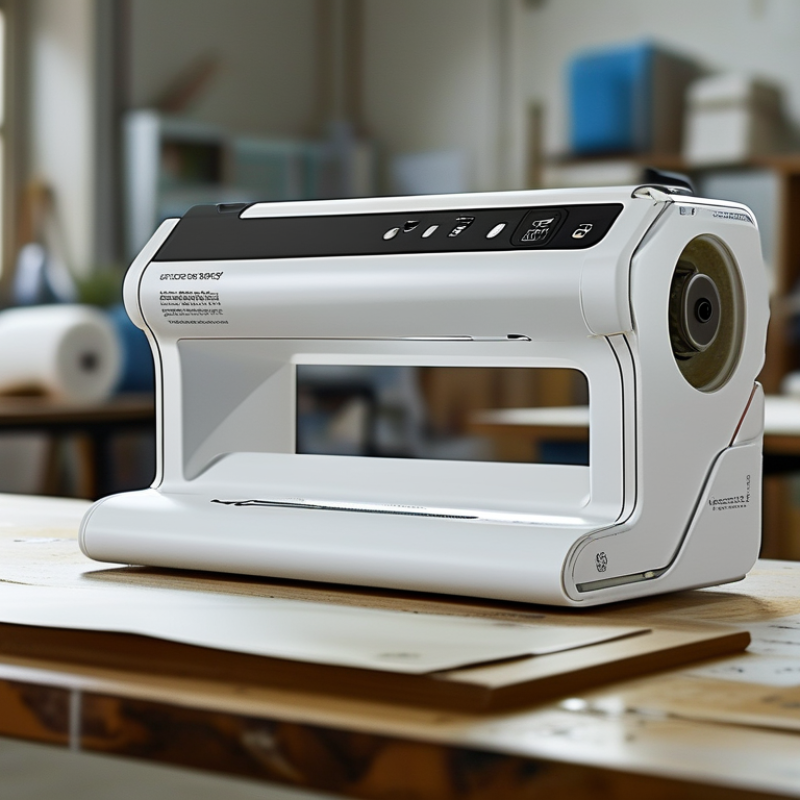
A mask folding machine converts layered filter material into a consistent folded mask body. It usually guides a nonwoven web through rollers, sensors, folding plates, and forming belts. The layers may include outer fabric, filter media, and a skin-contact layer. As the web moves, tension controls keep edges aligned. Folding plates create the pleats. Heated or ultrasonic stations can join selected areas, depending on machine design. Cutting units then separate individual bodies for later assembly. Some lines also add nose strips or ear-loop components.
In practical production trials, I watch the material path before judging output speed. A machine can run quickly yet produce uneven pleats, loose edges, or distorted nose areas. Sensors detect registration marks, web position, and abnormal tension. The controller adjusts motor speed and pressure within configured limits. Operators still inspect samples by hand. That human check matters. A clean, repeatable fold is more important than an impressive hourly number. The best choice depends on material width, mask geometry, changeover needs, and available floor space.
When choosing in 2026, ask for trial data using your actual materials. Request measurements for fold accuracy, rejection rate, noise, cleaning time, and energy use. Check whether settings are recorded and whether operators can understand alarms quickly. Small setup details can cause large waste. That is easy to underestimate. A thoughtful buyer also verifies training, spare-part access, and documented maintenance procedures. Still, no machine removes every process risk. Material variation, humidity, and rushed adjustments can change results. Leave room for learning.
Recommended evaluation priorities for selecting a mask folding machine
A mask folding machine forms and folds filter material into a consistent mask structure before subsequent processes such as edge sealing, welding, or packaging. When comparing machines, evaluate production capacity, compatibility with the required mask format, changeover time, footprint, operator safety, and maintenance requirements. The weighting shown above is an example procurement framework and should be adjusted according to actual production needs.
A mask folding machine in 2026 must support more than one product shape. Market demand is shifting between flat-fold medical masks, cup-shaped respirators, duckbill designs, and children’s sizes. Grand View Research estimated the global medical face mask market at over USD 5 billion in 2023. Its forecast also indicates continued growth through 2030. That growth does not guarantee stable product specifications.
Flat-fold masks usually need precise longitudinal folding, edge alignment, nose-wire insertion, and ultrasonic sealing. Cup-shaped respirators require deeper forming, stronger material tension, and controlled heat or ultrasonic bonding. Duckbill masks need wider opening control and careful pleat positioning. A machine that handles only one folding pattern may become expensive downtime.
Ask about folding flexibility, not only output speed. The system should support adjustable servo axes, recipe storage, rapid tooling changes, and sensors for web deviation. It should also process different layers, including spunbond, meltblown, and elastic components. According to Smithers’ face-mask industry outlook, filtration products are moving toward more specialized designs and higher performance requirements. However, report estimates vary by region and product category. That uncertainty deserves attention.
Request trials with your actual materials. Test wrinkle rates, fold depth, seal strength, and rejected pieces per thousand. A machine rated at 100 pieces per minute may perform differently with thicker respirator media. I have seen specifications look impressive on paper. Production reality is less polite. Choose verified adaptability over the highest advertised speed.
How to Choose a Mask Folding Machine in 2026?
Machine capacity should be measured under real working conditions, not only in catalog figures. Ask for stable output per minute, operating hours, material loss, and changeover time. A machine rated at 120 pieces per minute may produce less with thicker layers or frequent adjustments. Run a sample test using your actual fabric, dimensions, and folding pattern. Watch the output tray. Is the spacing consistent?
Accuracy affects both appearance and downstream packaging. Check fold position, edge alignment, and repeatability across several hours. A practical target is often a fold deviation below one millimeter, but the correct limit depends on your product design. Inspect at least 500 continuous pieces. One perfect sample proves very little. Record rejected units, sensor errors, and adjustments. Small defects become expensive at high volume.
Automation should reduce labor without hiding problems. Look for servo-controlled folding, automatic tension adjustment, clear alarms, and production data logs. A responsive control panel helps operators correct faults quickly. Safety interlocks and accessible maintenance points also matter. Ask how long a trained technician needs for setup and cleaning. Lower staffing sounds attractive, but complex software can create new delays. I would compare actual recovery time after a jam, not just the number of automated functions. Leave room for improvement. Your first trial may expose assumptions the quotation never mentions.
| Machine Configuration | Typical Output Capacity | Folding Accuracy | Automation Level | Typical Changeover Time | Compressed Air Requirement | Recommended Production Volume | Key Selection Consideration |
|---|---|---|---|---|---|---|---|
| Manual or Semi-Automatic Folding Unit | 20–50 masks/min Approximately 1,200–3,000 masks/hour | Usually within ±2–3 mm, depending on operator adjustment and material consistency | Manual feeding with motorized folding; basic controls and limited sensors | 10–20 minutes | Generally not required, or less than 0.3 MPa when pneumatic parts are installed | Small-batch, seasonal, or backup production | Lower purchase cost and easier maintenance, but labor requirements and output variation are higher |
| Single-Lane Automatic Folding Machine | 60–100 masks/min Approximately 3,600–6,000 masks/hour | Typically within ±1–2 mm with stable nonwoven material and calibrated guides | Automatic feeding, folding, counting, length adjustment, and fault detection | 8–15 minutes | 0.5–0.7 MPa; approximately 100–250 L/min, depending on design | Regular production with moderate daily demand | A practical balance of capacity, accuracy, footprint, and operating cost |
| High-Speed Single-Lane Folding Machine | 100–150 masks/min Approximately 6,000–9,000 masks/hour | Typically within ±1 mm under controlled material tension and synchronized feeding | Servo-driven folding, automatic tension control, photoelectric sensors, alarm monitoring, and recipe storage | 5–10 minutes | 0.5–0.7 MPa; approximately 150–350 L/min | Medium-to-high volume production | Suitable when consistent output and reduced operator intervention are more important than the lowest initial cost |
| Dual-Lane Automatic Folding Machine | 160–240 masks/min Approximately 9,600–14,400 masks/hour | Typically within ±1–1.5 mm; lane synchronization must be checked during acceptance testing | Independent lane control, automatic counting, material detection, servo synchronization, and centralized HMI control | 8–15 minutes | 0.6–0.8 MPa; approximately 250–500 L/min | High-volume production with continuous demand | Provides higher throughput, but requires more floor space, stronger material supply control, and more complex maintenance |
| Integrated Folding and Packaging Line | 80–150 finished packs/min, depending on pack size and packaging format | Folding position typically within ±1–2 mm; pack-count accuracy can reach 99.5% or higher with calibrated sensors | Automatic folding, counting, stacking, bag feeding, sealing, inspection, reject handling, and data communication | 15–30 minutes | 0.6–0.8 MPa; approximately 300–600 L/min | Large-scale production requiring low manual handling | Best for labor reduction and traceable production, but integration, validation, and service requirements are significantly higher |
| Custom High-Precision Servo Folding System | 60–140 masks/min, depending on mask structure and folding pattern | Typically within ±0.5–1 mm after commissioning and material qualification | Closed-loop servo control, recipe management, web-tension feedback, vision inspection, and remote diagnostics | 10–25 minutes | 0.6–0.8 MPa; approximately 200–450 L/min | Products with strict dimensional or appearance requirements | Choose when repeatability and process control justify a higher investment and specialized technical support |
| Data interpretation: The figures above are typical engineering ranges for mask-folding equipment and should be treated as comparison benchmarks rather than guaranteed specifications. Actual performance depends on mask type, nonwoven basis weight, material elasticity, folding geometry, operator skill, maintenance condition, and whether the machine is tested at rated speed or sustained production speed. | |||||||
| Acceptance checklist: Before purchase, request a production trial using the actual mask material, verify sustained output for at least 30–60 minutes, measure fold-position deviation from a representative sample, confirm compressed-air and electrical requirements, and evaluate safety guarding, spare-part availability, cleaning access, training, and after-sales support. | |||||||
A reliable mask folding machine should protect operators before improving output. Look for guarded moving parts, emergency-stop buttons, clear alarms, and safe access doors. Sensors should stop folding when material jams or a panel opens. Check noise levels and heat around sealing areas during a real trial, not only a demonstration. Small hazards become tiring after eight hours.
Maintenance design matters just as much. Choose a machine with accessible rollers, labeled adjustment points, and replaceable wear parts. A digital fault history can help technicians find repeated problems faster. Ask for cleaning instructions, maintenance intervals, training records, and spare-part availability. In practice, a machine may look simple but hide awkward service points. That deserves honest questioning.
Tips: Request a documented safety test before purchase. Confirm electrical protection, guarding, and emergency procedures with a qualified technician. Check whether settings can be locked by user level. Keep inspection logs for sensors, belts, fasteners, and emergency stops. Review applicable workplace, electrical, and product-quality requirements in your market. Do not assume one certificate covers every installation. A smooth demonstration can fail after dust enters a sensor area. Build cleaning time into the daily schedule. Reliability is designed, then repeatedly verified.
Choosing a mask folding machine in 2026 should begin with supplier evidence, not attractive photos. Ask for production records, sample outputs, and service contacts from comparable factories. A credible supplier should explain folding accuracy, speed, material limits, and expected changeover time. Request a live trial using your own nonwoven material. Small differences become costly at scale.
Check whether operators can adjust guides without specialized tools. Ask for evidence. Look for clear technical drawings, traceable component information, and practical training plans. A confident salesperson is useful, but documented answers matter more.
Compare total cost of ownership over five years. Include purchase price, shipping, installation, electricity, labor, spare parts, software updates, and downtime. Cheap is not cheap. A lower-priced machine may need frequent manual alignment, and hidden labor can erase the initial saving.
Request a written warranty with response times and exclusions. Ask which parts are locally available. A long wait for one sensor can stop an entire line. Use conservative output assumptions, rather than relying on the fastest demonstration.
Real production includes material changes, cleaning, rejected pieces, and short interruptions. Long-term value also depends on adaptability. Check future product sizes, upgrade options, remote support, and maintenance procedures. Speak privately with current users when possible. Their comments often reveal more than brochures. I have seen teams overvalue speed and undervalue setup simplicity. That judgment was not always right. Leave room for uncertainty.
Accreditations
ISO 9001 Quality Management
HSE Management Compliant
Products and services comply with relevant Australian (AS) and international (ISO, etc.) Standards.
"*" indicates required fields