A butterfly valve is a compact quarter-turn device used to start, stop, or regulate fluid flow. Its main element is a circular disc mounted on a rotating shaft. When the shaft turns ninety degrees, the disc opens or closes the passage. Simple movement. Fast response.
Philip L. Skousen, author of Valve Handbook, offers a practical principle: “The best valve is the one selected for the service.” This idea explains why a butterfly valve cannot be judged by price or appearance alone. Engineers must examine pressure, temperature, fluid chemistry, pipe size, and operating frequency. A valve carrying clean water may perform differently with abrasive slurry or corrosive chemicals. The seat material matters. So does the disc alloy.
In operation, the actuator applies torque to the shaft. The disc then changes position inside the pipe. Fully open, it creates relatively little resistance. Partly open, it throttles the flow, although poor sizing can create vibration, noise, and rapid wear. That detail is often missed.
Field experience adds another lesson. A valve can look perfect outside while its seat has deteriorated internally. Inspectors should check leakage, shaft movement, flange alignment, and actuator response. Manufacturer data and recognized standards should guide the final selection.
This article explains how a butterfly valve works, where it performs well, and where it may disappoint. The technology is straightforward, but the application is not always forgiving.
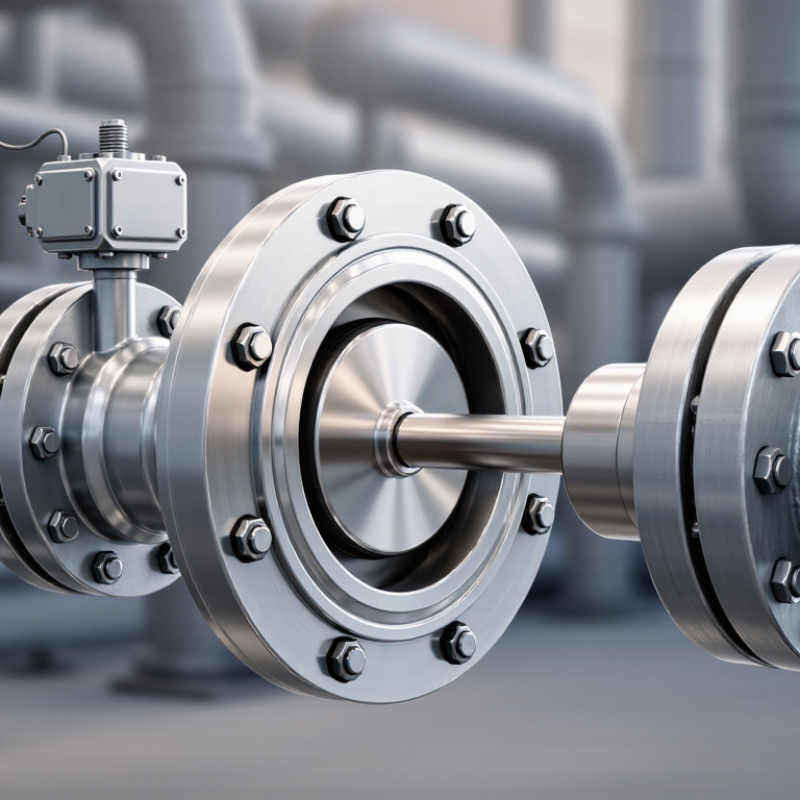
A butterfly valve is a quarter-turn device used to regulate or isolate fluid flow. Its main sealing element is a circular disc mounted inside a pipe. When the disc turns parallel to the flow, the passage opens. When it turns across the passage, flow stops. The design is compact, lightweight, and suitable for water, air, and many industrial fluids. However, a simple description can mislead. Valve performance depends on pressure, temperature, fluid properties, and sealing materials.
The core components include the body, disc, stem, seat, and actuator. The body connects to the pipeline and holds internal parts in alignment. The disc controls the opening area. The stem transfers rotation from the actuator to the disc. The seat forms a seal around the disc, reducing leakage when closed. An actuator may use a hand lever, gearbox, or powered mechanism. During inspection, check the stem connection and seat surface carefully. Small damage can prevent full shutoff. Incorrect disc alignment can also increase resistance and vibration.
Tips: Match the valve material with the process fluid. Confirm pressure and temperature ratings before installation. Keep the disc partly open during fitting to avoid accidental damage. Do not force a stiff actuator. That often signals debris, misalignment, or internal wear. A practical maintenance record should include operating cycles, leakage observations, and inspection dates. Even experienced technicians can overlook pipe stress near the valve.
What Is a Butterfly Valve and How Does It Work?
A butterfly valve controls flow with a circular disc mounted on a rotating stem. The disc usually turns through 90 degrees. At 0 degrees, it blocks the passage. At 90 degrees, it aligns with the pipeline and allows flow. An actuator, hand lever, or gearbox supplies the turning force. During partial opening, the disc throttles flow, although poor sizing can create turbulence, noise, and unnecessary wear.
The sealing method depends on the valve design. Concentric valves use a flexible seat around the disc, while double-offset and triple-offset designs reduce rubbing during operation. Pressure, temperature, fluid type, and pipeline velocity all influence operating torque. API 609 covers butterfly valve requirements for many industrial services, while ISO 5211 addresses actuator mounting dimensions. MarketsandMarkets reports that the global industrial valves market is projected to reach about USD 88 billion by 2028. This growth reflects demand for compact, efficient flow control, not proof that every butterfly valve fits every system.
Tips: Check the flow arrow, inspect the seat, and confirm actuator torque. Keep the disc clear of welding debris. A half-open valve is not always a good control valve. In field maintenance, small particles can damage sealing surfaces surprisingly fast. The simple quarter-turn principle is useful, but incomplete. Temperature cycling and pressure spikes still deserve careful review.
A practical overview of butterfly valve construction, operation, flow control, and typical performance characteristics.
| Data Dimension | Description | How It Works or Typical Data | Practical Considerations |
|---|---|---|---|
| Valve Type | Quarter-turn rotary valve | A circular disc rotates through approximately 90 degrees to move between the open and closed positions. | The compact design generally requires less space and material than many linear-motion valve designs. |
| Main Flow-Control Element | Disc | The disc is mounted across the flow passage. When aligned with the pipe, it permits flow; when turned perpendicular, it blocks the passage. | The disc remains in the flow path even when fully open, so it creates some pressure loss. |
| Valve Body | The outer housing that supports the internal components and connects to the pipeline | Common body styles include wafer, lug, double-flanged, and fully flanged configurations. | Wafer and lug styles are often selected where installation space and weight are important. |
| Stem or Shaft | The mechanical connection between the actuator and the disc | Turning the stem transfers torque to the disc, changing the valve position. | Stem arrangements may be concentric, double-offset, or triple-offset, depending on sealing and service requirements. |
| Seat | The sealing surface between the disc and body | In a resilient-seated design, an elastomeric seat forms the shutoff seal. High-performance and metal-seated designs use different sealing geometries and materials. | Seat material must be compatible with the fluid, temperature, pressure, and required leakage class. |
| Operating Sequence | Open, regulate, or close the flow |
Closed: disc is approximately perpendicular to the pipe. Partly open: disc rotates to a selected angle to restrict flow. Open: disc is approximately parallel to the flow direction. |
The exact travel angle and operating torque vary with valve construction and service conditions. |
| Actuation Methods | Manual, pneumatic, electric, or hydraulic | A hand lever is common for smaller valves; gear operators are used for higher torque; automated actuators enable remote or modulating control. | Actuator sizing should account for breakaway torque, running torque, shutoff pressure, safety factor, and operating frequency. |
| Typical Rotation | Approximately 90 degrees | A quarter-turn mechanism moves the disc from the closed position to the fully open position. | Position indicators are useful for confirming whether the disc is open, closed, or partially open. |
| Pressure Range | Application-dependent | Many resilient-seated butterfly valves are used in moderate-pressure services, while high-performance and triple-offset designs can handle higher pressures. | Never select a valve from nominal size alone; verify the pressure-temperature rating and applicable piping standard. |
| Temperature Capability | Determined mainly by seat and body materials | Elastomeric seats are commonly used for moderate temperatures, while metal seats and specialized materials support more demanding thermal conditions. | The fluid temperature, ambient temperature, cycling frequency, and thermal expansion must all be considered. |
| Flow-Control Behavior | Moderating flow by changing the disc angle | Flow does not increase in a perfectly linear relationship with disc angle; the actual characteristic depends on disc profile, pressure drop, and system geometry. | For precise throttling, use a valve specifically designed and sized for control service rather than relying on a basic isolation valve. |
| Pressure Drop | Generally low to moderate when fully open | The disc and stem occupy part of the flow area, producing a measurable loss even in the open position. | Pressure loss rises as the disc closes and flow turbulence increases. |
| Common Fluids | Liquids, gases, and selected slurries | Typical services include water, treated wastewater, air, gases, cooling fluids, and some mildly abrasive media. | Fluid compatibility, solids concentration, erosion, corrosion, and seat wear must be evaluated before selection. |
| Size Availability | Available across a wide range of nominal pipe sizes | Butterfly valves are commonly used from small utility lines to very large water and process pipelines. | The permitted size range depends on the body pattern, pressure class, end connection, and applicable standard. |
| Primary Advantages | Compact, lightweight, and quick to operate | The quarter-turn action allows rapid isolation, while the short face-to-face dimension can simplify piping layout. | Lower weight and space requirements can reduce installation and support demands, especially on larger pipelines. |
| Key Limitations | Disc obstruction, torque variation, and service limitations | The disc remains exposed to the flowing medium, and throttling may cause turbulence, noise, cavitation, or accelerated wear in unsuitable conditions. | Check minimum flow, cavitation risk, shutoff requirements, material compatibility, and allowable installation orientation. |
| Typical Applications | Water distribution, HVAC, fire protection, wastewater, industrial process lines, and general utility piping | The valve is commonly selected for isolation and, when correctly designed, for moderate flow regulation. | Application suitability depends on pressure, temperature, fluid chemistry, solids content, leakage requirements, and control accuracy. |
A butterfly valve controls flow with a circular disc mounted on a rotating shaft. The disc turns inside the pipe, opening, throttling, or stopping fluid movement. Its compact body suits water systems, ventilation lines, process piping, and many industrial services. In the field, alignment matters greatly. A slightly offset pipe can increase disc friction and shorten seat life.
Common designs include wafer, lug, and flanged butterfly valves. Wafer valves fit between pipe flanges and save installation space. Lug valves use threaded inserts, allowing removal from one side in some layouts. Flanged versions provide stronger connections for larger or higher-load systems.
Resilient-seated valves often handle water and moderate temperatures. High-performance, double-offset valves reduce seat contact during rotation. Triple-offset designs use a metal seat for demanding temperature and pressure conditions.
Actuation changes how the disc moves. A manual lever offers quick control on smaller valves. Gear operators provide greater turning force and finer positioning. Pneumatic actuators respond quickly and work well where compressed air is available. Electric actuators support remote control and useful position feedback. Hydraulic actuators deliver high torque for large valves, but require careful fluid management.
Selection should consider pressure, temperature, cycle frequency, fail-safe needs, and available power. A practical mistake is choosing an actuator by valve size alone. The fluid, disc torque, and operating conditions must also be checked.
A butterfly valve controls flow with a circular disc mounted on a rotating shaft. The disc turns 90 degrees, moving from fully open to fully closed. In field applications, this simple motion allows fast isolation in water, HVAC, fire protection, and process piping. The 2024 UN World Water Development Report states that agriculture accounts for about 70% of global freshwater withdrawals. This helps explain the valve’s extensive use in irrigation systems.
Common body materials include ductile iron, carbon steel, stainless steel, and aluminum bronze. Disc materials often match corrosion and temperature requirements. EPDM suits many water services, while PTFE handles more demanding chemical conditions. NBR can perform well with some oils, but compatibility must be checked. Small systems may use DN25 or DN50 valves. Large pipelines can exceed DN1200. These ranges are typical, not universal.
Pressure ratings commonly include PN6, PN10, PN16, Class 150, and Class 300. The rating depends on body strength, seat design, temperature, and the selected standard. API 609 covers butterfly valve construction and testing practices. ASME B16.34 requires pressure-temperature rating evaluation rather than relying on one fixed number. A PN16 valve does not always deliver 16 bar at high temperature. That detail is easy to miss. Real installation records should confirm the medium, temperature, flange standard, and shutoff requirement before selection. Catalog data alone can be misleading.
A butterfly valve uses a circular disc to regulate or stop fluid flow. The disc rotates around a central shaft, usually through 90 degrees. Its compact body saves space and reduces installation weight. Industrial plants use these valves in water treatment, chemical processing, HVAC, food production, and fire protection systems. In water lines, operators often choose resilient-seated designs for reliable isolation. High-temperature or abrasive services may require metal-seated construction. The wrong seat material can fail quickly.
Selection must begin with operating conditions, not only pipe diameter. Engineers should check pressure, temperature, fluid chemistry, solids content, cycling frequency, and required leakage class. The U.S. Department of Energy’s pumping-system guidance estimates that pumping systems can represent about 27% of industrial electricity use. Lower valve pressure loss can therefore support meaningful energy savings, especially in continuously operating systems. The International Energy Agency reports that industry consumes roughly 37% of global final energy. Small efficiency decisions deserve attention.
Actuation also matters. Pneumatic actuators suit frequent, fast movement, while electric actuators offer precise positioning. A technician should verify torque margins, shaft alignment, and emergency-fail requirements.
Oversizing is common. It can reduce control accuracy and increase cost. A neat specification can still fail during commissioning. Actual field conditions, including pipe vibration and unexpected sediment, deserve a second review.
Accreditations
ISO 9001 Quality Management
HSE Management Compliant
Products and services comply with relevant Australian (AS) and international (ISO, etc.) Standards.
"*" indicates required fields