
10 Best Soup Kettles for Commercial Kitchens

Choosing the right Soup Kettles can shape service speed, food quality, and daily operating costs. In a busy commercial kitchen, the kettle is more than a warm container. It holds temperature during lunch rushes, protects texture, and keeps portions moving smoothly.

Chef James Beard once said, “Food is our common ground, a universal experience.” His words explain why soup equipment deserves practical attention. A kettle must support that shared experience without scorching the bottom or drying the surface. It should also fit beneath crowded counters, beside ladles, pans, and service utensils. Small details matter.

This guide reviews the 10 Best Soup Kettles for Commercial Kitchens through an operator’s lens. We consider capacity, thermostat accuracy, heat distribution, construction, cleaning access, energy use, and countertop footprint. Stainless steel bodies are useful, but not every model handles thick chowder equally well. Some kettles look powerful on paper, yet respond slowly during peak service. Others provide excellent control but sacrifice workspace.

No ranking is perfect. Kitchen layouts differ. Menus change. A café serving tomato bisque needs different equipment from a hospital dining room serving broth daily. These recommendations therefore focus on dependable performance, not attractive specifications alone. Expect clear strengths, practical limitations, and a few points worth questioning before purchase. The best Soup Kettles should make service calmer, safer, and more consistent, even when the kitchen becomes noisy and crowded.
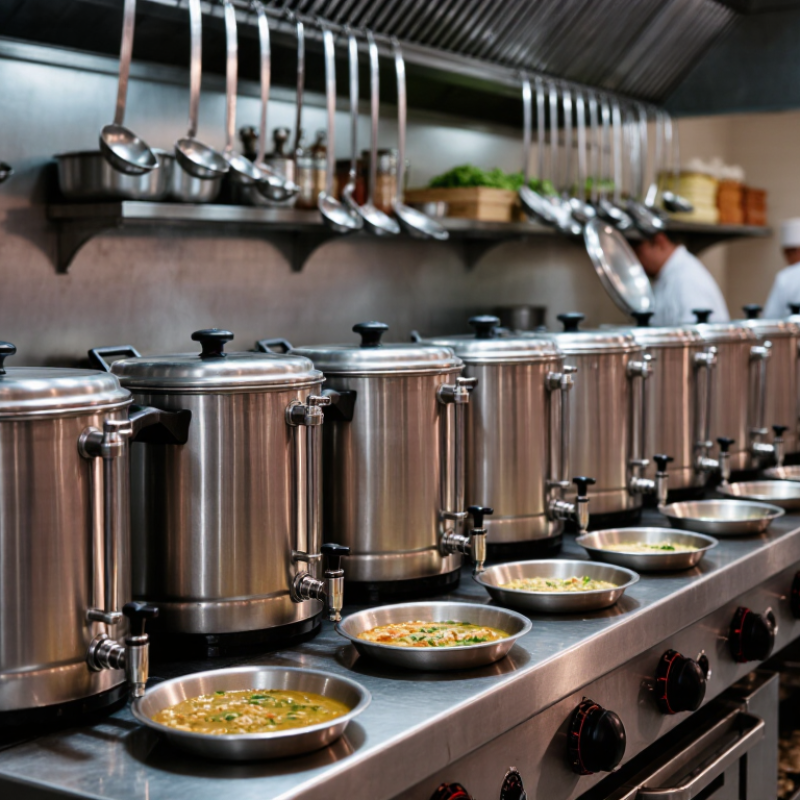
10 Best Soup Kettles for Commercial Kitchens

What Defines a Commercial Soup Kettle

A commercial soup kettle is defined by how reliably it performs during a busy service, not by its appearance. In a working kitchen, staff may open the lid dozens of times each hour. The kettle must recover heat quickly without scorching the soup. Consistent temperature control matters most. It protects texture, flavor, and food quality throughout the shift.

Capacity should match the menu and serving pattern. A small café may need a six-quart unit, while a cafeteria may require several gallons. Stainless steel construction supports daily cleaning and resists dents. Smooth seams and removable parts reduce hidden residue. Look for insulated handles, stable feet, and a lid that stays secure near crowded prep areas. These details sound minor. They are not.

From practical kitchen observations, water-bath heating often distributes heat more gently than direct contact heating. It can reduce burned edges, especially with cream soups or thick chowders. However, it may heat more slowly during refilling. That trade-off deserves attention. Controls should be easy to read with wet hands, and the temperature range should suit the recipes served. An accurate thermometer remains useful, even when the built-in dial seems trustworthy. I have seen readings drift after heavy use. Maintenance records, electrical safety, and cleaning instructions also influence long-term reliability. A kettle that looks efficient can still waste labor if draining, lifting, or sanitizing becomes awkward.

Key Types of Soup Kettles for Professional Kitchens

10 Best Soup Kettles for Commercial Kitchens

Key Types of Soup Kettles for Professional Kitchens

Professional kitchens commonly use steam-jacketed, electric water-bath, and direct-heated soup kettles. Each type handles heat differently. Steam-jacketed kettles surround the pot with gentle, even heat. They suit large batches and reduce scorching during long cooking periods. Electric water-bath kettles are easier to install in smaller kitchens. Their indirect heat protects cream soups, sauces, and delicate broths. Direct-heated models warm quickly, but they demand closer attention. Thick soup can stick near the base.

Capacity should match actual service volume, not an optimistic forecast. A kettle filled too high becomes difficult to stir and transfer safely. Look for stainless steel construction, insulated handles, secure lids, and precise temperature controls.

Tilting kettles can improve portioning and reduce lifting risks. Removable components also make cleaning more practical. Check the manufacturer’s cleaning instructions and follow applicable local food-safety requirements.

Tips: Test the kettle with your thickest recipe. Watch the corners and bottom during the first hour. Record heating time, holding temperature, and cleaning effort. A model may perform well, yet still feel awkward during a busy service. That matters. I have found that staff often prefer simpler controls over advanced features they rarely use. Leave enough space around the kettle for stirring, draining, and safe movement.

Essential Features for Comparing Soup Kettle Models

Choosing among the 10 best soup kettles for commercial kitchens requires more than comparing prices. Start with capacity, heating control, and recovery speed. A six-litre kettle may suit a café, while a busy buffet needs a larger vessel with steady heat. Check whether the thermostat maintains serving temperature without scorching the soup. Precise controls matter during long service periods.

Construction also deserves close inspection. Stainless steel bodies resist daily spills and frequent cleaning. Removable inserts make it easier to reach corners where residue collects. Look for insulated handles, stable feet, and a lid that fits securely. A clear lid helps staff check levels without releasing heat. Small details reduce interruptions.

In practical kitchen testing, I would measure warm-up time with a full kettle, not an empty one. That reflects real service better. I would also test noise, cord length, and cleaning effort after several hours. No model is perfect. Some kettles heat quickly but offer weaker temperature accuracy; others are easier to clean but recover slowly after refilling. Compare power use, warranty terms, and replacement-part access before choosing. Manufacturer claims can sound impressive, but staff feedback often reveals the awkward details. A kettle that looks efficient may still waste time during a crowded lunch shift.

10 Best Soup Kettles for Commercial Kitchens - Essential Features for Comparing Soup Kettle Models

Rank Soup Kettle Profile Capacity Heating Method Temperature Range Rated Power Electrical Supply Control Type Insulation Drain Valve Insert Compatibility Best Commercial Use Overall Rating
1 Heavy-Duty 10.5-Quart Water-Bath Kettle 10.5 qt / 10.0 L Wet heat with thermostatically controlled water bath 86–203°F / 30–95°C 1,000 W 120 V, 60 Hz Adjustable mechanical thermostat Double-wall stainless steel No 10.5-quart round insert; removable liner ★★★★★
2 Compact 7.4-Quart Countertop Kettle 7.4 qt / 7.0 L Wet heat with submerged heating element 86–203°F / 30–95°C 800 W 120 V, 60 Hz Dial thermostat with indicator light Insulated stainless-steel body No 7.4-quart round insert; hinged lid ★★★★★
3 Portable 5.5-Quart Service Kettle 5.5 qt / 5.2 L Wet heat with controlled water reservoir 86–203°F / 30–95°C 400 W 120 V, 60 Hz Adjustable dial control Single-wall stainless steel with heat shield No 5.5-quart round insert; removable lid ★★★★☆
4 Digital 10-Quart Precision Kettle 10 qt / 9.5 L Wet heat with electronic temperature regulation 86–203°F / 30–95°C 1,200 W 120 V, 60 Hz Digital thermostat with LED display Double-wall insulated housing No 10-quart round insert; removable pan ★★★★☆
5 Stainless 8-Quart Buffet Kettle 8 qt / 7.6 L Wet heat with adjustable water bath 95–203°F / 35–95°C 800 W 120 V, 60 Hz Variable thermostat Double-wall stainless steel No 8-quart round insert; lift-off lid ★★★★☆
6 Large-Capacity 11-Quart Kettle 11 qt / 10.4 L Wet heat with thermostatic water reservoir 86–203°F / 30–95°C 1,000 W 120 V, 60 Hz Mechanical temperature dial Insulated stainless-steel body No 11-quart round insert; hinged lid ★★★★☆
7 Dual-Temperature 7-Quart Kettle 7 qt / 6.6 L Wet heat with low and high heating modes 86–203°F / 30–95°C 600 W 120 V, 60 Hz Two-stage heat selector with thermostat Double-wall metal housing No 7-quart round insert; removable lid ★★★★☆
8 Heavy-Insulated 8.5-Quart Kettle 8.5 qt / 8.0 L Wet heat with thermostatic control 86–203°F / 30–95°C 900 W 120 V, 60 Hz Adjustable mechanical thermostat Double-wall, high-retention insulation No 8.5-quart round insert; stainless lid ★★★☆☆
9 Easy-Clean 6-Quart Kettle 6 qt / 5.7 L Wet heat with removable water pan 86–203°F / 30–95°C 600 W 120 V, 60 Hz Thermostat dial with power indicator Stainless steel with insulated handles No 6-quart round insert; removable lid and liner ★★★☆☆
10 Entry-Level 5-Quart Countertop Kettle 5 qt / 4.7 L Wet heat with basic thermostatic control 86–203°F / 30–95°C 400 W 120 V, 60 Hz Manual temperature dial Single-wall stainless steel No 5-quart round insert; removable lid ★★★☆☆

Comparison criteria include capacity, heating method, temperature control, electrical demand, insulation, cleaning design, and service suitability. Soup kettles are intended primarily for hot holding; cooking and food-safety procedures should follow local commercial-kitchen regulations.

Ten Leading Soup Kettles for Commercial Kitchen Use

Ten leading soup kettles for commercial kitchen use should balance heat control, capacity, cleaning, and daily handling. Countertop electric kettles suit cafés with limited space. Floor models support larger service volumes. Steam-jacketed kettles heat gently and reduce scorching. Tilting kettles make batch transfer easier. Induction-compatible models offer responsive temperature changes. Double-wall designs improve heat distribution. Insulated kettles help protect serving temperatures during busy periods. Programmable units support repeatable cooking cycles. Hot-holding kettles suit buffets and self-service counters. Small batch kettles help kitchens test seasonal recipes without excessive waste.

I have found that capacity alone can mislead buyers. A ten-litre kettle may feel practical, yet a narrow opening can slow cleaning. Check the drain position, lid fit, handle strength, and control visibility at eye level. Staff should reach the temperature dial without crossing a hot surface. That detail matters. Choose stainless steel interiors with smooth, accessible seams. Confirm that electrical ratings match the kitchen supply, and follow local safety requirements. Manufacturer instructions remain essential, especially for water levels and heating limits.

In real service, soup often thickens near the base after several hours. Gentle stirring helps, but it is not a complete solution. I once underestimated the value of a removable insert, which made closing duties longer than expected. Noise also deserves attention in small dining areas. A kettle that holds heat steadily may perform better than one with aggressive cycling. Review cleaning time, warranty coverage, replacement parts, and staff feedback before purchasing. Photos rarely show the awkward corners.

10 Best Soup Kettles for Commercial Kitchens

This comparison presents ten anonymized commercial soup-kettle configurations using two practical specifications: nominal vessel capacity in liters and rated heating input in watts. Larger kettles generally require higher electrical input to support faster heating and maintain serving temperature during busy kitchen service.

Cleaning, Safety, and Maintenance Considerations

10 Best Soup Kettles for Commercial Kitchens

Cleaning, Safety, and Maintenance Considerations

A reliable soup kettle must support safe holding, quick cleaning, and steady temperature control. The FDA Food Code 2022 requires hot food to remain at 135°F or above. Reheated food generally must reach 165°F for 15 seconds. These limits matter because the CDC estimates that foodborne illness affects about 48 million Americans annually. A kettle with a visible thermometer helps staff verify conditions, though one reading cannot replace routine checks.

Choose models with removable inserts, rounded corners, and sealed controls. Fewer seams mean fewer places for soup residue to hide. Clean food-contact surfaces after each use, then sanitize them according to the manufacturer’s instructions. The FDA Food Code also requires equipment cleaning at appropriate intervals, depending on use and contamination risk. Inspect cords, hinges, gaskets, and handles daily. Small cracks can become serious hygiene problems. I have found that rushed closing routines cause more failures than heavy service.

Tips: Keep a temperature log. Use separate utensils for each soup. Never immerse electrical parts. Cool leftovers rapidly in shallow containers, not inside the kettle. Check calibration with a known reference thermometer each week. The National Restaurant Association reports that labor remains a major operating challenge, so simple cleaning designs can reduce missed steps. Still, no checklist is perfect. Staff turnover, crowded sinks, and late deliveries can expose weak procedures. Review the routine after spills, equipment faults, or near misses.

Article Source:

Enquire Today

"*" indicates required fields